How to Get Rid of Drain Flies by Removing What They Breed In
No enzyme product kills a fly. It digests the film on the pipe wall, and that film is the only place the larvae can live. Scrub the drain, then dose a thickened bacterial product nightly for 21 days without rinsing it through.
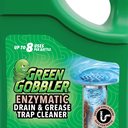
No enzyme product kills a fly. It digests the film on the pipe wall, and that film is the only place the larvae can live.
| Dwell time | Overnight with no water run through the pipe. |
|---|---|
| Volume of product | About 4 oz per 4 inch drain, from Rockwell Labs rating a quart at 8 applications and a gallon at 32 |
| Dilution | Ready to use for a gel. |
| Water temperature ceiling | Not the lever. |
| Working pH range | One published subtilisin protease is active from pH 6.0 to 12.0. |
| Surface compatibility | PVC, ABS, cast iron and copper: no caustic, so no joint damage. |
| Time to result | Three weeks minimum, because the life cycle runs 10 to 15 days at about 70F and a generation has to clear |
Why Killing the Flies You Can See Does Nothing
The adults in your bathroom are the end of the process, not the cause. Swatting them removes this week's generation and changes nothing about next week's.
The distinction is the whole treatment logic. Adults are output and the film is the machine, and everything that works on this page works on the machine. Money spent on the output, sprays, swatters, bombs, buys quiet days and a reset clock.
- The adult:
- A moth-like fly 2 to 3 millimeters long. Penn State puts it at a tenth of an inch and UC Integrated Pest Management at an eighth.
- The eggs:
- University of Kentucky entomologists describe groups of eggs laid on gelatinous films of organic matter. Not in water. On film.
- The larvae:
- They develop in thin surface films, in standing water lasting a week or more.
- The film:
- The soft brown layer coating the pipe above the trap, which is both food and nursery.
- The clock:
- The life cycle takes about 10 to 15 days at about 70F.
That figure is the closest thing to a receipt the film argument has. It compares a working enzyme solution against water alone on an immobilized film, and the gap between the two is the case for putting biology in the pipe instead of liquid. It is a bench result on a hard surface, not a drain trial, and it is presented as exactly that.
A fungal lipase at 0.01 weight percent in purified water removed 83.7 percent of immobilized fat from a hard surface in 60 minutes, against 21.06 percent for water alone.
The life cycle clock is why the calendar beats the spray can. A generation turns over in about two weeks, so the honest test of a treatment is whether adults stop emerging after three, and the honest finish is a week of empty cups after that. Nothing visible in the room tells you anything sooner.
How to Find Which Drain the Flies Are Coming From
Treating every drain in the house is how people spend three weeks on the wrong pipe. University of Kentucky entomology publishes a free test that finds the right one.
The cup test is free, and that is its second advantage after accuracy. A sleeve of cups and a jar of petroleum jelly cost less than any product in the category, and five days of patience replaces three weeks of treating pipes that were never breeding anything.
Coat the inside rim of a clear plastic cup lightly with petroleum jelly and invert one over each suspect drain for several days. Emerging adults stick to the coating. Run it on every candidate at once, including a rarely used guest bathroom and a refrigerator drain pan.
The neglected drains deserve the most suspicion. A guest bathroom that gets one flush a month holds standing water in its trap and film on its walls, and a refrigerator or condensate pan holds a shallow puddle for weeks. The cup test does not care where the film hides; it reports which opening the adults chose.
- Flies under one cup only:
- That is the breeding site. Treat it and stop treating the others.
- Flies under several cups:
- Treat them all on the same nightly schedule.
- No flies after 5 days:
- The site is not a drain you can see.
The no flies result is information rather than failure. It rules out the visible drains in one week and points the search at the hidden reservoirs in the escalation section: pans, sumps, cracks and anything else that stays wet. A negative cup is a map edge drawn in five days.
What an Enzyme Drain Product Does and Does Not Do
The concession comes first, in the manufacturer's own words. Green Gobbler's FAQ asks whether its Enzyme Sink Drain Cleaner will get rid of drain or fruit flies, and answers no.
An honest no from a manufacturer is rare enough to notice. The FAQ answers the question a buyer actually types, and it declines the sale rather than winking at it. The rest of the page is built to be worthy of that kind of answer.
That answer is correct and it answers a different question. Their question is whether the bottle kills insects. Yours is why the flies come back after every spray.
So the split is clean. An insecticide handles the adults in the room tonight. A bacterial product removes the reason there will be more in ten days, which is what University of Kentucky names as the fix.
The two tools also run on two clocks. An insecticide empties the room tonight and leaves the film untouched, and the film restocks the room inside two weeks. The gel starts slow and ends the supply, which is the only outcome that survives a generation. Anything sold as one tool for both clocks is a schedule, not a fix.
What You Need to Clear a Drain Fly Breeding Site
A brush matters as much as the bottle, and a gel beats a liquid on a vertical pipe wall. **A thickened probiotic gel:** Rockwell Labs rates InVade Bio Drain at 8 applications per quart and 32 per gallon, about 4 ounces per drain. Its California ingredient disclosure names nonpathogenic Bacillus spores and an acrylate crosspolymer thickener. **A liquid main line cleaner:** The cheap maintenance dose for several drains at once. **A long bottle brush:** It takes the thickest part of the film off in two minutes. **Clear plastic cups:** For the test that finds the right drain.
The gel format is the method and not a preference. A liquid cannot hold a vertical wall, and the film is on a vertical wall, so a liquid dose is mostly a rinse with product in it. The thickener in the professional gel exists to buy the organisms hours of contact where the larvae actually live.
The brush is the cheap half of the kit and the half that does the immediate work. Two minutes of abrasion takes the outer, thickest layer of film off the wall, and the biology then has a thin layer it can digest inside the dosing weeks. Skipping the brush is the classic way to turn a two week job into a two month one.
The cups are on the list because the diagnosis outranks the treatment. One drain producing adults gets the full course, the rest of the house gets nothing, and that is both cheaper and more honest than treating plumbing on suspicion.
How to Clear the Film Drain Flies Breed In
Nights, not days, and three weeks rather than three days. The clock is set by the insect rather than by the product.
The sequence is diagnosis, mechanics, chemistry, patience, in that order. The cup test picks the pipe, the brush removes the bulk, the gel holds biology on the wall, and the three weeks outlast every egg and pupa that was in the pipe when you started. Every step has a purpose the next one depends on.
The no rinse rule is the load bearing instruction. A rinse after the dose sends the product through the trap exactly when it has started working, and the label says so in writing. Dose when nobody will use the fixture, and the gel keeps its hours on the wall.
The every other day rhythm in the early weeks exists because the film does not disappear after one dose. Each application works the layer the last one softened, and the three week calendar is what turns 4 ounces at a time into a cleared pipe. Miss the schedule and the clock resets toward the eggs, not toward you.
Pour slowly around the sides rather than straight down the middle, and the gel does what the brush could not reach. The wall above the trap is vertical and the opening is round, so a ring of gel sliding down the pipe wets the whole circumference on the way. The center pour wets the water below and nothing else.
Keep a simple log through the three weeks: dose nights, brush checks, cup counts. The schedule is the treatment, and a missed night or a flushed dose explains a bad week better than any product difference can. Nine lines on the back of an envelope is the whole quality system.
-
Run the inverted cup test on every candidate drain for 5 days before you buy anything, and treat only the drain the flies emerge from.
5 days of testing
-
Scrub the first 6 inches of the drain with a long bottle brush until the material coming back thins out.
6 inches of pipe
-
Wait until nobody will use that fixture for 8 hours. Trade labels specify applying at low drain usage times.
8 hours of no use
-
Pour about 4 ounces of a thickened product slowly around the sides of the opening so it coats the wall.
4 ounces per drain
-
Do not rinse it through. Rockwell Labs' label says not to rinse treated areas.
0 rinses
-
Repeat every other day for the first two weeks, which is the maintenance rate the label specifies.
1 dose every other day
-
Keep going for 21 nights.
21 nights
-
Re-run the cup test from day 21 and count zero adults for 7 consecutive mornings before you call it done.
7 clear mornings
The Step People Skip: Scrubbing Before You Pour
A thin liquid poured into a drain behaves the way water does. It runs down the center of the pipe, through the trap and out, touching the wall for a second on the way past.
The pipe geometry explains every format choice in the category. Water finds the low path, and the low path is the center of the pipe and out through the trap, while the film coats the wall above it. Products built for this job are thickened for exactly that reason, and thin products are rinses by physics rather than by intention.
The film is on the wall, which is why the professional product is thickened. Even a gel works better on a thinner layer, so scrubbing the first six inches leaves the biology a job it can finish in a week rather than a month.
Scrubbing also protects the schedule. A thinned film is a week of digestion and an untouched film is a month, and the difference is two minutes with a brush. A reader who skips the scrub and blames the gel for being slow has run the experiment with the variable doubled.
The corpus silence is the honest state of the evidence. Nobody is counting drain fly treatments in the communities we read, so the page stands on entomology sources, manufacturer labels and a bench figure. That is a thin set, and it is named rather than dressed up.
How to Know You Got the Breeding Site
Use the same inverted cup, and start counting on day 21 rather than day 3.
The day 21 start protects the verdict from stragglers. Pupae that were already in the pipe when dosing began emerge on their own schedule regardless of the gel, and counting from day three counts pupae the treatment never had to beat. The calendar is part of the instrument.
Check it every morning. Zero adults for 7 consecutive mornings is the result. Anything shorter is inside the noise, because stragglers keep emerging from pupae that were in the pipe when you started.
Run the brush down the drain weekly and look at what comes back. Less each week means the film is going. The same amount every week means the product is being flushed before it works.
The weekly brush check is a trend read rather than a pass or fail. A diminishing return of brown material means the wall is clearing and the dose is clinging, and an unchanging return means the product is leaving the pipe before it works, which is a format problem rather than a patience problem.
Do not judge this on flies in the room, because adults wander in from other drains.
Adults from a neighboring drain wander more often than people expect, and a fly crossing the counter is not evidence about the drain you treated. The cup is the only reporter that knows where its fly came from.
Why the Drain Flies Came Back
Judge every branch on day 21 rather than day 3. A generation takes 10 to 15 days at about 70F, so a shorter test tells you nothing.
The tree is sorted by the three ways the method fails: format, target and clock. A product that will not cling, a drain that was never breeding, and a verdict taken inside one generation. None of the three is a brand problem, and all three have fixes that cost less than a bottle.
The strongest branch is the last one. Three weeks of correct treatment with the right gel and the right drain is a real experiment, and adults that keep emerging after it are telling you the site is somewhere else. That branch hands you a camera scope rather than a fourth product, which is the page earning its keep.
The judge on day 21 rule orders everything else in the tree. Every branch's fix contains a clock reset, and reading any branch early converts a fixable mistake into a purchase. The calendar is the cheapest tool available and the one that decides whether the others worked.
The first branch is the format branch and it is the most common. A liquid in a pipe that needs a gel fails by physics, and no amount of extra nights fixes a dose that will not stay on the wall. Check the branch by what the product does when you pour it: cling or run.
The cup test branch rewards patience twice. Once at the start, when it finds the producing drain before product gets spent, and once at the end, when seven clean mornings certify the result. The same five cent cup bookends the whole method, which is the tidiest economics on the site.
-
Three weeks of nightly dosing and adults are still emerging from the same drain.
Why: The product is running down the center of the pipe rather than staying on the wall where the film is.
What to do: Scrub the first 6 inches with a bottle brush, switch to a thickened gel, pour it around the sides, and do not rinse.
-
You treated every drain in the house and the flies moved rooms.
Why: You never found the breeding site, so the doses were spread across pipes that were not producing anything.
What to do: Run the inverted cup test on every candidate for 5 days and treat only the drain the adults come out of.
-
It looked clear at day 5 and the flies were back at day 12.
Why: You judged it inside one generation. The life cycle takes about 10 to 15 days at about 70F.
What to do: Keep dosing to 21 nights and start counting from day 21. Zero adults for 7 consecutive mornings is the finish line.
-
Twenty-one nights of correct treatment and the cups still catch adults.
Why: The site is not the drain you treated.
What to do: Move the cup test to those, and if none of them produces adults, get the line scoped with a camera.
What Not to Pour Down a Drain With Flies in It
- Insecticide:
- University of Kentucky's fact sheet says it in one line: do not pour insecticides down drains to kill drain flies.
- Bleach:
- It runs straight through in seconds and it ends the bacterial product you paid for. Rockwell Labs' label says not to blend its gel with bleach, acid or caustic cleaners, disinfectants or antimicrobial products.
- A caustic drain opener:
- It is built to dissolve a blockage rather than remove a coating.
- Boiling water, as the whole plan:
- It is in the pipe for seconds.
- Water, right after the dose:
- Rockwell Labs says not to rinse treated areas.
- A tablet in a drain you never scrubbed:
- It holds a clean drain clean and will not clear an established film.
Half the list is a flushing problem rather than a chemistry problem. Bleach, boiling water and a rinse all pass through the pipe in seconds, and the film is still there when they are gone. The products that work stay, and everything on the list removes the thing that stays.
The tablet entry is the gentlest trap on the list. Maintenance products genuinely hold a clean drain clean, they are marketed beside the infestation products, and the difference between the two jobs never makes the label. An established film needs abrasion and a clinging dose, not a slow dissolve.
The caustic entry deserves its own sentence, because it is the one that looks most like a drain product. An opener is engineered to punch through a blockage in a pipe that has stopped draining, and drain flies breed in pipes that are draining fine. Different machine, different job, and the opener does nothing to a coating.
When Drain Flies Stop Being a Drain Problem
If the cups still catch adults after 21 days of correct nightly treatment, the breeding site is not the drain you treated.
The escalation is a search pattern rather than a shopping list. Wet places, then standing water, then hidden moisture, in the order a homeowner can inspect them. Each stop on the pattern is checkable with eyes or a cup, and the plumber is the last stop rather than the first.
Other places stay wet for a week without looking like drains. University of Kentucky names a refrigerator drain pan directly, and a toilet tank, a sump, a condensate pan or a crawl space all qualify. A cracked line behind a wall wets the soil around it, and that is a plumber with a camera rather than a fourth product.
A Washington State University bulletin reports that a septic additive dose stays small next to the population already in a tank. It cites a study of 48 tanks that found no difference in sludge level.
The septic finding marks a boundary worth knowing. A dose is small against an established population, and a septic tank is the extreme case. In a bathroom drain the dose is large against the film on the wall, which is why the same bottle logic that does nothing in a tank does real work in a pipe.
The cracked line is the one that punishes delay. A leak behind a wall keeps soil wet indefinitely, the flies find it, and no drain treatment reaches it. The camera scope is the expensive end of this page precisely because it is the only tool that answers the question the cups keep asking.
What It Costs to Clear a Drain Fly Infestation
- Do it yourself:
- The 6 drain and disposal products in our catalog, which is the drain category outside the septic treatments and outside the Zep trade line, ran $7.99 to $44.99 a package on August 19, 2026.
- The professional gel:
- Pest control distributors sell it and we have no sourced retail price.
- A plumber:
- A camera inspection of a suspected cracked line is the terminal option, and we have no sourced national figure.
The product is cheap and the diagnosis is the expensive part.
The package arithmetic is on your side. One package covers a full course on one drain, and most infestations are one drain once the cup test has spoken. The second purchase in this story is usually the brush and the cups, not more product.
The unsourced prices are named as unsourced. Professional gel moves through pest control distributors and camera work prices by market, and inventing national figures for either would be the exact failure this page refuses elsewhere. The local quote is the number, and the phone call is free.
The expensive part of this job is skipping the cheap part. Treating every drain on suspicion burns product and weeks, and the cup test that prevents it costs a handful of cups and five days of patience. Diagnosis is the value, and it costs almost nothing.
The two ends of the range are two different problems. The low end buys the do-it-yourself course that works when the cup test has spoken, and the high end is the terminal diagnosis that a cracked line forces. Nothing in between is a product tier, because the product is the cheap part of every path on this page.
$8.99 to $24 Typical spend on this job
The 6 drain and disposal products in our catalog, which is the drain category outside the septic treatments and outside the Zep trade line, ran $7.99 to $44.99 a package at prices read August 19, 2026. A single package covers a 21 night course on one drain.
What We Could Not Verify About Drain Flies and Enzyme Products
Our comment corpus is not a source here, and we say so rather than borrowing a number from a different scenario. Three PubMed searches run August 19, 2026 each returned zero records: "enzyme drain cleaner Psychodidae larvae control", "drain fly Clogmia albipunctata biofilm control drain", and "bacterial drain treatment biofilm fly larvae reduction".
The PubMed zeroes are searches anyone can rerun. A reader who finds a trial we missed has found something the page should add, and the page is structured to make that easy. That is the difference between a gap and an embarrassment: the searches are reproducible, and the page behaves accordingly.
What the page stands on instead is a chain of named sources. The entomology pages carry the biology and the cup test, the manufacturer label carries the dose and the no rinse rule, and the bench figure carries the film argument. No link in the chain is peer reviewed for drain flies specifically, and every link is checkable.
One number adjacent to this topic does exist and the page still declines to lean on it. The bench lipase figure says something about enzymes and films on a hard surface, and nothing about larvae in a pipe, and the distance between those two claims is exactly where a weaker page would publish it as proof.
The gaps here are the kind that close from outside the category. A pest control trial, a public health study, a manufacturer with a measured emergence count, any of these could retire this section in a day. Until then the page runs on its chain of named sources and says so in one place, where the reader can weigh it.
| Claim | Source | Tier |
|---|---|---|
| The drain fly life cycle takes about 10 to 15 days at about 70F, eggs are laid on gelatinous films of organic matter, larvae develop in water or thin surface films in standing water lasting a week or more, and common sites include sink and floor drains, toilet bowls and tanks and refrigerator drain pans. University of Kentucky Entomology, ENTFACT-615 | entomology.mgcafe.uky.edu | Secondary source |
| Control of drain flies should be aimed at elimination of breeding sites, and the most effective control method is to clean pipes and traps thoroughly to remove accumulated slime. Same fact sheet | entomology.mgcafe.uky.edu | Secondary source |
| Do not pour insecticides down drains to kill drain flies. Clear plastic cups with a very light coating of vegetable oil or petroleum jelly can be inverted over drains for several days to catch emerging adults and identify breeding sites. Same fact sheet | entomology.mgcafe.uky.edu | Secondary source |
| Green Gobbler's own FAQ answers no to whether its Enzyme Sink Drain Cleaner will get rid of drain or fruit flies, and describes the product as a bacteria and enzyme blend with additional surfactants. Its directions are 2 to 4 oz weekly for regular drain clogs and 2 to 4 oz daily for problematic drains, at $31.99 per gallon | greengobbler.com | Direct or original source |
| InVade Bio Drain is a thickened probiotic gel formulated to cling to the sides of drains, sold as a quart rated at 8 applications and a gallon rated at 32, which is about 4 oz per application. Rockwell Labs product page, read August 19, 2026 | rockwelllabs.com | Direct or original source |
| The label directs users to moisten the drain with 1 to 2 gallons of warm water if it is not used regularly, apply at low drain usage times of the day, repeat every other day for ongoing maintenance, not to rinse treated areas, not to blend with bleach, acid or caustic cleaners, disinfectants or antimicrobial products, not to apply to unsealed wood, and to store between 35 and 95F | rockwelllabs.com | Direct or original source |
| Rockwell Labs' California SB-258 ingredient disclosure for InVade Bio Drain names nonpathogenic Bacillus spores and an acrylates crosspolymer thickener among its ingredients | rockwelllabs.com | Direct or original source |
| 0.01 weight percent Rhizopus niveus lipase in purified water with no surfactant removed 83.7 percent of immobilized fat from a hard surface in 60 minutes, against 21.06 percent for the same water with no lipase | pmc.ncbi.nlm.nih.gov | Direct or original source |
| A published subtilisin protease is active from pH 6.0 to 12.0 and is inactivated below pH 4. Falkenberg et al., FEBS Open Bio 12(10):1729-1746, 2022 | pmc.ncbi.nlm.nih.gov | Direct or original source |
| The bacteria or enzyme in an additive dose remains small compared to the bacteria already in a septic tank and therefore provides little if any benefit, and a study of 48 septic tanks found no difference in sludge level between tanks using bacterial additives and those that did not. Washington State University extension bulletin | wpcdn.web.wsu.edu | Secondary source |
| Adult moth fly size is reported at a tenth of an inch by Penn State and an eighth of an inch by UC Integrated Pest Management, so we publish the range of roughly 2 to 3 millimeters | ipm.ucanr.edu | Secondary source |
| Counted from the published product directory, prices read August 19, 2026: Instant Power Disposal & Drain Cleaner 128 oz at $9.99, Instant Power Beverage Tower Drain Cleaner 32 oz at $9.99, Green Gobbler Fresh Scent Drain Sticks at $15.98 rated 4.1 across 41,100 ratings | enzymecleaningproducts.com | Direct or original source |
| PubMed searches run August 19, 2026 returned zero records for "enzyme drain cleaner Psychodidae larvae control", "drain fly Clogmia albipunctata biofilm control drain" and "bacterial drain treatment biofilm fly larvae reduction" | pubmed.ncbi.nlm.nih.gov | Direct or original source |
- What we believe
- Drain flies are a breeding site problem, and removing the film is the only treatment that survives one life cycle.
- What would change our mind
- A published trial showing adult emergence at zero for 30 days from a drain treated with insecticide alone, film left in place.
- What we could not verify
- Any peer-reviewed measurement of a bacterial or enzyme drain product reducing drain fly emergence.
Frequently Asked
Do enzyme cleaners get rid of drain flies?
Not directly, and Green Gobbler says so about its own enzyme drain cleaner. What they do is digest the film the larvae live in, which is the only durable fix. The flies are a symptom of the film, and the film is the population. Remove where they breed and the adults age out with nothing to replace them. Killing the ones in the air changes none of the arithmetic.
What drain cleaner kills drain flies?
None of the ones worth using. University of Kentucky's fact sheet says outright not to pour insecticides down drains to kill drain flies. Killing adults leaves the eggs and larvae in the film, and a new generation emerges within 10 to 15 days. The insecticide route also aims at the stage that matters least. Adults live days, and eggs in the film keep producing them. The gel route removes the nursery, which is the only version of this that stays fixed.
What is the best enzyme for drain flies?
Lipase does most of the work, because a pipe wall film is largely fat. One controlled test removed 83.7 percent of immobilized fat from a hard surface with a fungal lipase in plain water, against 21.06 percent for water alone. Fat is also what holds the flies' food and the smell together, so the same enzyme does both jobs. Protein and starch matter less on a pipe wall. That specificity is why a lipase-forward product outperforms a general one here.
How do I permanently get rid of drain flies?
Find the breeding drain with an inverted cup test. Scrub the first 6 inches of pipe wall, dose nightly with a clinging gel for 21 days with no water afterward, then keep a weekly maintenance dose going. Permanent means the film never rebuilds. The maintenance dose is what keeps it permanent, because every drain refilms with use. Nightly for the clearing stretch, then weekly, keeps the wall below the threshold flies need. Stop the dose and the calendar starts again.
More on the same problem in Drains and Septic.