Enzyme Cleaner for Pet Stains and Pet Urine
Cat urine is not stronger dog urine. It is a different molecule, and it takes about a day to appear.
If your cat has recently started urinating outside the box and did not before, see a vet before you buy anything. Cystitis and urinary tract infections present exactly this way, and no cleaning strategy fixes them.
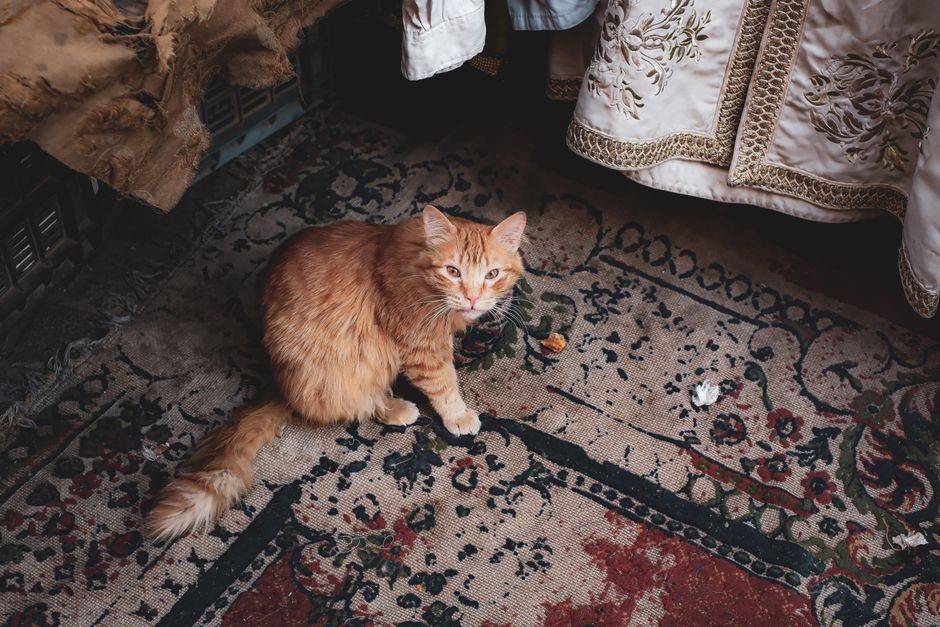
Cat urine is the hardest mess in this category and the one most articles get wrong. It is not uric acid. Your cat's liver converts uric acid to allantoin before the urine leaves its body, and uric acid has no smell. Cats put an enzyme called cauxin into their urine, and cauxin releases a cat-only compound called felinine. Over roughly 12 to 24 hours felinine breaks down into a sulfur compound, and that is the smell everyone recognizes. Dogs produce nothing like it.
That timing is why yesterday's accident is worse than this morning's. It is also why cat urine is a different chemical problem from dog urine rather than a stronger one. Dog urine is mostly the ammonia note, made by ordinary bacteria splitting the urea in the deposit.
A spot cleaned in spring announces itself in August because of salt, not crystals. Urine leaves a salt and protein deposit in the fiber and the pad. Salts pull water back out of humid air at roughly 55 to 75 percent relative humidity, the spot goes damp again, and the bacteria resume. Remove the deposit and there is nothing left to switch back on.
Use more than feels sensible. Urine travels through carpet into the backing and the pad, and the cleaner has to travel the same distance to meet it.
Find a Product for a Specific Mess
Answer three questions and this tool lists every product whose reviewed records cover that exact mess on that exact surface. It shows only combinations we have verified — where we hold no record, it says so rather than widening the question. Matches are listed alphabetically, not ranked.
Answer all three questions to see documented matches.
The same evidence without the tool: every product page carries a "reviewed uses" row, and products with reviewed carpet support filter in the full grid below.
Can an Enzyme Cleaner Remove Old Pet Stains?
Yes, on urine that has been in carpet for weeks or months, provided enough liquid reaches the deposit and stays wet. What fails is almost never the chemistry. It is a misting bottle, a ten-minute blot, or an oxidizer that went down on the same spot first.
| Fresh, under four hours old | 15 to 30 minutes, kept wet. |
|---|---|
| A few days old | Several hours, covered. Overnight is better. |
| Weeks to months old | Overnight minimum, and two or three treatments across several days. Rocco and Roxie's own FAQ says deep set-in urine wants a couple of days. |
| The trade benchmark | Bridgepoint's instruction sheet for Bio-Charge, a professional product, specifies a 4 to 24 hour dwell on carpet. |
Evaporation ends the reaction, not the clock. Cover the area with plastic sheet or a damp towel. Pour until the carpet is wet six inches past the mark in every direction, which on a dinner-plate spot is a real fraction of the bottle.
There is a mechanical reason old urine wants the long end. Most pet products sold as enzyme cleaners are bacterial spore products. The spores germinate in minutes, take one to two hours to grow out, and only then start producing enzymes. Blotting the area dry at ten minutes ends the process before any enzyme exists. The volume arithmetic works the numbers for a specific spot size. Age also concentrates the deposit as the water leaves it, which is why the second and third treatments often do more than the first. The bottle is not failing. The mess is paying down a balance.
When an Enzyme Cleaner Is the Wrong Tool for a Pet Mess
A specialist who never says do not buy this is a salesman. On these five jobs, something else wins.
| Skunk on the dog or the doormat | A peroxide oxidizer. Skunk odor is sulfur compounds, and oxidation destroys those on contact. An enzyme has no bond to cut. |
|---|---|
| A showing or an inspection today | An oxidizer with mechanical extraction, going in knowing you may be crusting the deposit rather than removing it. |
| A wool rug | A neutral non-enzyme detergent. Protease digests protein, and wool is protein. |
| A professional extraction already booked | Apply nothing. Blot and wait, so the technician is not working around your chemistry. |
| Smell that survived three proper soakings | It is in the pad, the tack strip or the subfloor. Lift the carpet at that spot and replace the pad. No bottle reaches a subfloor. |
Consumer Reports ran fresh dog urine and onion juice painted on fabric and an oxidizer won. On that test it should. Onion smell is sulfur compounds and enzymes lose it by design, not by underperforming. Different question, different right answer: most people searching this category want to know why the spot they cleaned in March smells again in July.
The rows share one logic. Where the mess is thin and on the surface, or where the clock is measured in minutes, chemistry that acts instantly wins. Where the mess is deep and the clock is yours, the deposit-removing chemistry wins. Reading the table that way turns five exceptions into one rule.
Buyer-rating evidence for Enzyme Cleaner for Pet Urine
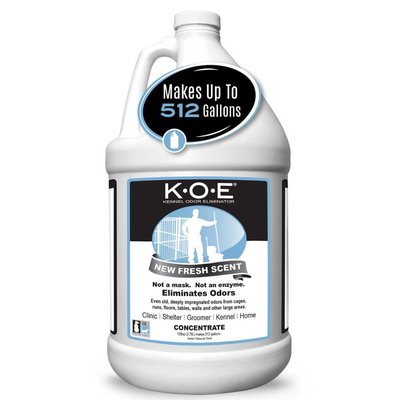
Ordered from the published retailer rating and the size of its cited buyer pool. This is not a product test. Ignore the sticker on concentrates: at 1:64 a fifty-dollar gallon costs about a penny per diluted ounce, and the dilution ratio decides.
A big buyer pool tells you what a big buyer pool can tell you. It shows whether a formula holds up across thousands of floors, animals and application habits, at a scale one tester's rug could never match. It cannot show whether the product reached the pad, because no reviewer can inspect one. A returning smell months later gets written about under a different heading than a lasting fix.
Read the cards with the failure causes in mind. The products with the deepest pools were often bought by people who had already failed with something cheaper, which is a harder test than a first attempt. Treat a rating as the start of a question rather than the end of one. What got poured, how long it stayed wet, and what went on the spot first decide the outcome at least as much as the name on the bottle.
Format belongs in the same read. A concentrate bought as a gallon is a different purchase from a trigger spray at the same rating. The concentrate lets you afford the volume a pad-level mess actually needs. When two cards sit close, the one that makes the second soaking cheap is the better buy for an old stain. That is the quiet advantage of the gallon.
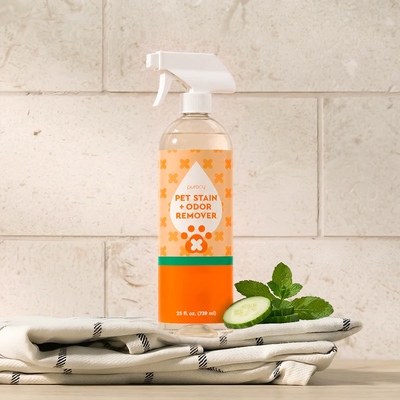
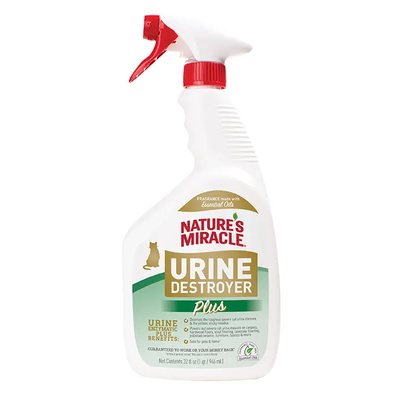
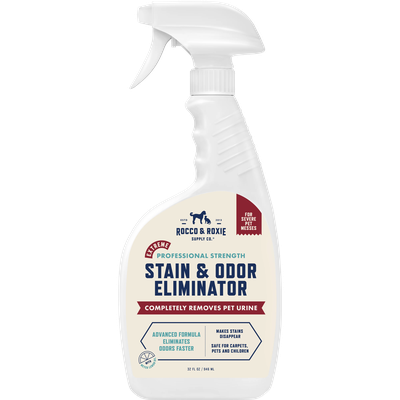
What the cited evidence supports: An enzyme or bacterial cleaner is the only thing sold in a bottle that removes the deposit generating pet urine odor, rather than pausing the smell.
What would change this conclusion: A test rig with a carpet pad, a tack strip and a subfloor showing an oxidizer clearing aged urine odor at ten minutes.
What we could not verify: Whether any consumer product contains uricase. Google Patents full text returns two worldwide results for "uricase" with "urine odor" and one for "uricase" with "pet urine", and no US consumer pet product patent.
Every Pet Enzyme Cleaner We Track, With Prices
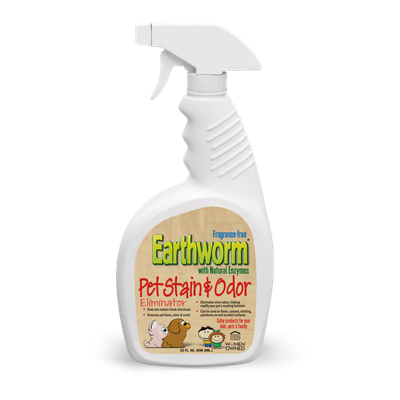
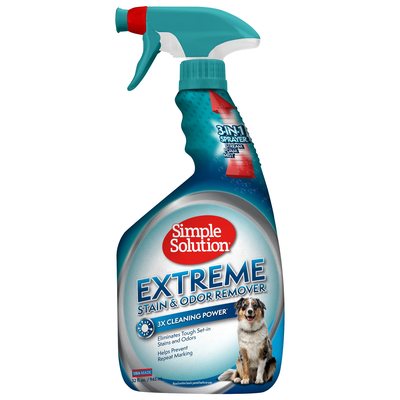
Every product in the pet category sits in this grid, priced where a price is published and rated where a retailer publishes a count. Nothing is excluded for a small review pool and nothing is promoted for a large one. The grid is the category as it exists on shelves. Two facts organize how it reads: most pet bottles are bacterial spore products, and the mess usually runs deeper than the visible mark.
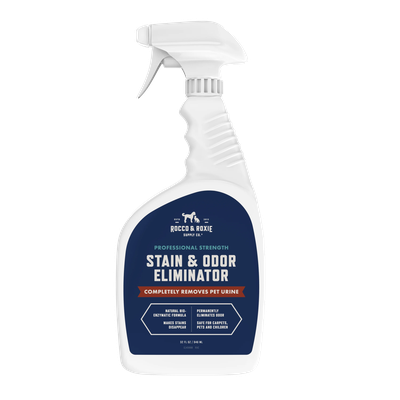
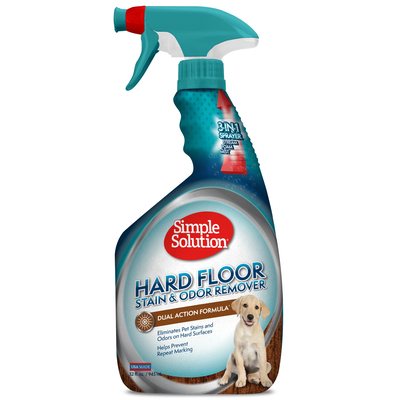
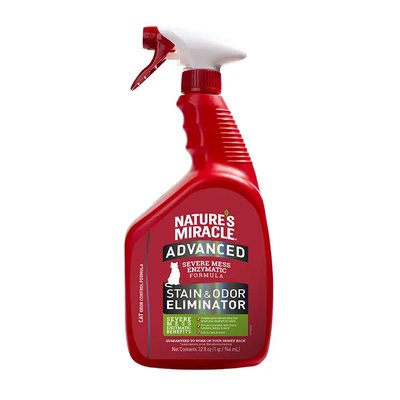
The first fact sets expectations for identical-looking bottles. A ready-to-use spray and a gallon concentrate from the same line can carry the same organisms, and the concentrate exists because a pad-level soak of a whole area is not affordable at spray prices. That is also why the cheapest bottle is rarely the cheapest outcome: buying the format that makes the correct pour affordable is the biggest saving available here, and the dilution ratio does that arithmetic for you. Compare formats first and brands second.
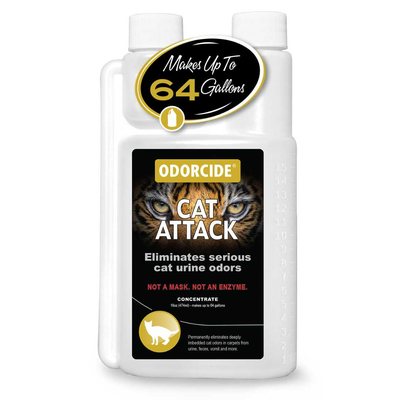
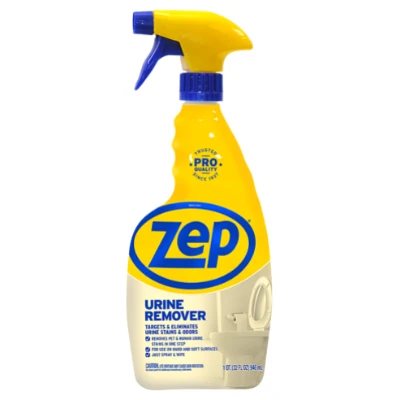
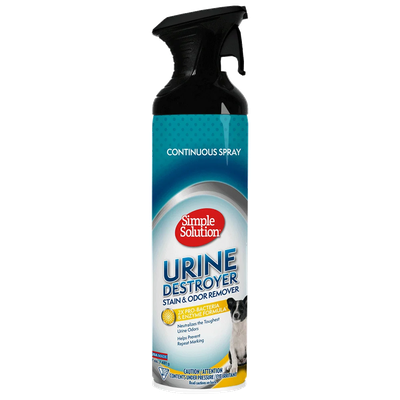
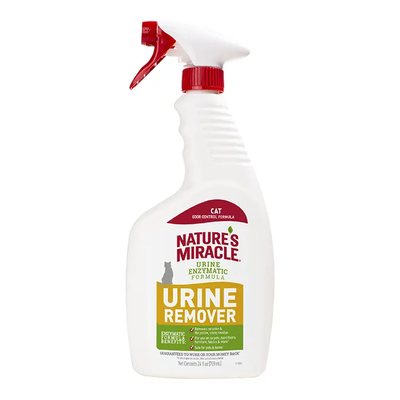
How to Get Cat and Dog Urine Smell Out for Good
Cat Urine on Carpet: How Much Cleaner You Need
Carpet is four layers, not one. The urine went through all of them and most treatments only wet the top.
Read the guideEnzyme Cleaner for Cat Urine: The Full Method
Cat urine is not stronger dog urine. It is a different molecule, it takes about a day to appear, and volume is what decides whether you remove it.
Read the guideEnzyme Cleaner for Dog Urine: The Full Method
Dog urine is the easier of the two pet smells. It is also the one people under-treat, because the mark on top is smaller than the deposit underneath.
Read the guideEnzyme Cleaner for Litter Box Areas
The tray is rarely the whole problem. The floor, the wall and the tray's own scratches are holding what you keep scrubbing off.
Read the guidePrevious Owner's Pet Smell: Finding It and Removing It
You cannot treat what you have not found, and the previous owner already treated everything you can see. Start with the search, not the bottle.
Read the guideDog Urine Smell That Keeps Coming Back: How to Stop It
The chemistry is not what failed. Something is still in the pad, and warm humid air turns it back on every summer.
Read the guideWhat Makes Cat and Dog Urine Smell?
Two molecules make the smell, one of them only in cats, and neither one is the molecule the whole category blames.
Read the guideEvery guide in this grid starts from the same arithmetic: the deposit runs wider and deeper than the mark, and the pour has to match it. Volume first, dwell second, verification third. The brand question comes last because it decides the least.
Sources
| Claim | Citation | Tier | Read |
|---|---|---|---|
| Bio-Charge specifies a 4 to 24 hour dwell on carpet | Bridgepoint Bio-Charge instruction sheet | Direct or original source | |
| Deep set-in urine wants a couple of days | Rocco and Roxie product FAQ | Direct or original source | |
| Cats excrete cauxin, which releases felinine, which degrades to a sulfur compound | Peer-reviewed feline biochemistry literature on cauxin and felinine | Direct or original source | |
| Dogs and cats convert uric acid to allantoin, and uric acid is odorless | Comparative veterinary physiology on hepatic uricase | Direct or original source | |
| Safer Choice will not certify a spray-delivered enzyme product | EPA Safer Choice program criteria | Direct or original source | |
| Hydrogen peroxide would kill the probiotics in a live bacterial cleaner | Bacterial cleaner patent literature | Direct or original source | |
| Fresh dog urine and onion juice were the two test soils, and an oxidizer won | Consumer Reports, May 28, 2026, free preview text only | Secondary source | |
| No US consumer pet product patent names uricase | Google Patents full text: "uricase" "urine odor" (2), "uricase" "pet urine" (1) | Direct or original source |