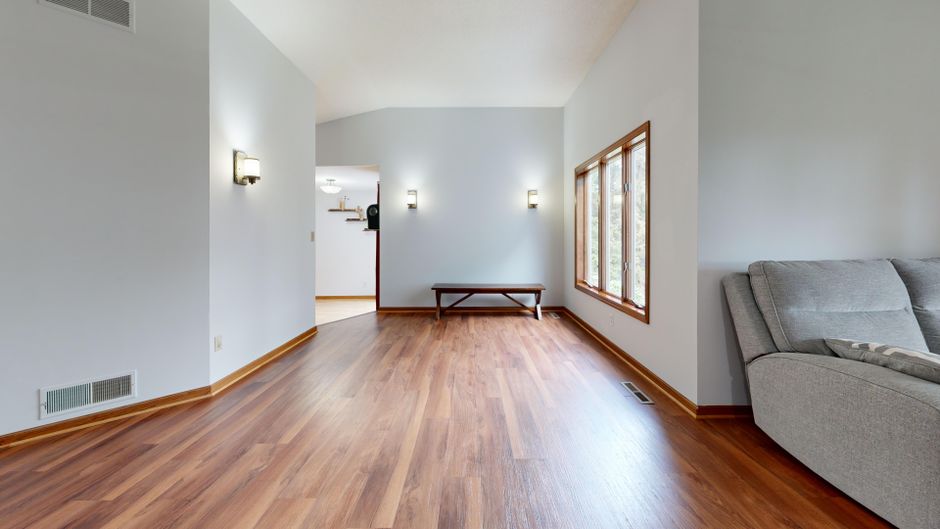
Enzyme Cleaner for Carpet, Hardwood and Concrete
The chemistry is the same as carpet. The physics is not, because wood swells and carpet does not.
Material decides the method more than the mess does. Everything written about pouring, soaking and covering is written for carpet, which is an absorbent assembly built to get wet and dry again without damage. On hardwood, laminate, cork, unsealed grout and natural stone, standing liquid for hours is the failure mode rather than the method.
The two things that decide the outcome are volume matched to the contamination and dwell kept wet. On a moisture-sensitive surface you cannot have both. The honest job here is to say which one you are giving up, and what that costs.
On carpet, take both. Pour until the fiber is wet six inches past the mark in every direction, cover it so it cannot dry, and leave it. Bridgepoint's own instruction sheet for Bio-Charge, a professional carpet product, specifies a 4 to 24 hour dwell. Evaporation ends the reaction, not the clock.
Unsealed concrete is the other extreme. A slab takes urine deep into the pore structure, and no surface application reaches the bottom of that. The useful question on concrete is not which bottle. It is whether the contamination is still in the top layer, and if it is not, whether this has become a grinding and sealing job.
One thing worth knowing before you treat carpet: a pale patch or a brown ring appearing after treatment is usually not the product. Aged urine is alkaline and attacks fiber dye directly, so the damage was already there under the soil. The other cause is wicking, where solution carried into the pad rises back up as it dries and deposits what it dissolved at the fiber tips. Neither is fixed by applying more.
Enzyme Cleaner on Hardwood Floors: What No Manufacturer Publishes
No manufacturer document we read publishes a dwell time for a finished wood floor. We read the safety data sheets and product FAQs for Nature's Miracle, Rocco and Roxie and Bissell, and none of them names wood. The 4 to 24 hour instruction on a bottle is written for carpet, and the thing that makes it work on carpet is the thing that damages a floor.
| Did it get in, or is it sitting on top? | A sealed, intact finish holds the deposit where a cloth reaches it. Seams, worn patches, scratches and the gaps between boards have already let it past. |
|---|---|
| If it got in, is this still a cleaning problem? | Below the finish, between the boards or into the subfloor is a refinishing and sealing problem. Say it plainly rather than sell a fourth bottle. |
| If it is on top, how do you get contact time? | A damp cloth laid on the spot and re-dampened, rather than liquid standing on the floor. Work in short repeats and dry the surface between them. |
A floor whose seams took the urine will usually not go completely odorless, and anybody who owns that floor already suspects it. The seams are the boundary of the cleaning problem, and the finish is the boundary of the bottle. The method that survives the gap is short contact, repeated, with drying in between, and a finish check before any of it starts.
Can You Put an Enzyme Cleaner in a Carpet Cleaner Machine?
In the tank at room temperature, yes. Through the heater, no. Rocco and Roxie says plainly that the high heat in a steam cleaner deactivates its own biological ingredients. The better sequence is to pre-treat the spot by hand, let it dwell overnight, then bring the machine in a day or two later as the removal step. That is what the machine is actually good at.
The machine question is really a sequencing question, and the sequence runs treat, dwell, extract. Hand-applying the product puts the chemistry where the mess is and gives it the hours it needs. Running the machine afterward flushes and lifts what the chemistry has already taken apart, which is a mechanical job, and machines are excellent at mechanical jobs. Both halves are cheap, and only the order matters.
Heat is why the tank order matters more than the tank itself. The manufacturer's own FAQ concedes what a heater does to biological ingredients, and a cool rinse tank carries none of that risk. Room-temperature liquid through the machine, heat off, and the extraction step loses nothing while the treatment step keeps everything it soaked for.
One caution travels with every machine pass on an old spot. Extraction pulls from the surface first, and a deposit in the backing or the pad can wick upward as the carpet dries, which reads as failure a day later. A second treatment after the wick appears is the standard answer, and it costs less than expecting one pass to end a deep, months-old deposit. Plan the second pass before the first one starts.
When an Enzyme Cleaner Is the Wrong Tool for a Surface
The table reads as one rule applied five ways. Ask whether the mess is organic, and whether the surface it landed on can take the liquid an organic mess requires. Where either answer is no, the enzyme cleaner is the wrong aisle, and the right product is an acid, an oxidizer or a tradesperson rather than a bottle. Each row also names what forcing the enzyme route anyway would cost, and that cost is the useful half of the table.
| Wool, silk, hemp and delicate cottons | A neutral non-enzyme detergent. Protease digests protein and wool is protein. Jungmaven, a hemp apparel maker, instructs owners not to use "products with enzymes" on its fabric. |
|---|---|
| Limescale, rust, hard water and soap scum | Acid. These are inorganic and there is no bond for an enzyme to cut. Vinegar costs less than anything we list. |
| Confirmed subfloor or unsealed slab contamination | Lift the carpet, replace the pad, treat and seal the boards. No bottle reaches a subfloor. |
| A same-day showing or inspection | An oxidizer with mechanical extraction, going in knowing you may be crusting the deposit rather than removing it. |
| Onion, garlic or skunk on upholstery | A peroxide oxidizer. Those smells are sulfur compounds and oxidation destroys them on contact. |
The materials caution runs both directions, which is worth saying because it is the fair version. HydraMaster's own pro-oxidation technical article restricts powder oxidation treatments to synthetic carpet and does not recommend them for wool or silk either. Its author is HydraMaster's VP of Marketing.
What the cited evidence supports: On carpet an enzyme or bacterial cleaner removes the deposit that keeps making the smell. On a moisture-sensitive floor it reaches only what the finish has not already let past.
What would change this conclusion: A manufacturer document that names a hard-surface dwell time and a method, tested on a finished wood floor rather than on carpet.
What we could not verify: Any dwell time for finished wood. We read the Nature's Miracle, Rocco and Roxie and Bissell safety data sheets and product FAQs, and none of them names wood at all.
Every Enzyme Surface Cleaner We Track, With Prices
This grid holds the full surface category, every product we track with its price where one is published and its rating where a retailer publishes a count. The category spans trigger sprays, pour bottles and concentrates sold for hard floors and carpet alike, and the material they will meet matters more than any brand on the card. Brand is the last variable, not the first.
Match the format to the surface before comparing anything else. Carpet and rug jobs are liquid jobs, and a concentrate poured at volume is the affordable route to the soaking a pad-level mess needs. Hard-surface jobs are restraint jobs, and a spray or a damp-cloth application buys contact time without the standing liquid that warps wood, swells laminate and marks stone.
The hardwood gap belongs in the read. No manufacturer document we track names a dwell time for a finished wood floor. A card advertising enzyme action on sealed floors is describing the chemistry, not a tested method for that material. Treat those rows as surface-compatible by label and unproven by method, and lean on the decision rules for anything that has reached seams or gaps.
Price the job, not the bottle. A gallon concentrate at label dilution covers many full soakings of a room-sized spot, and a ready-to-use spray covers a fraction of one at the same money. The cheaper product is the one whose format matches the depth of the mess in front of you. Depth prices the bottle, and the format is what buys depth.
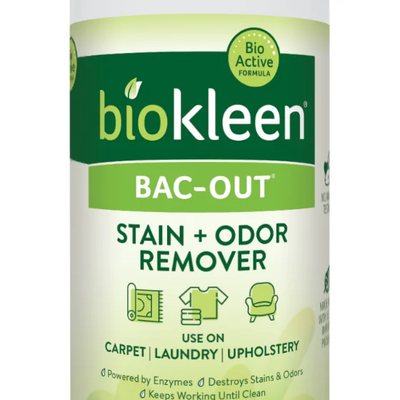
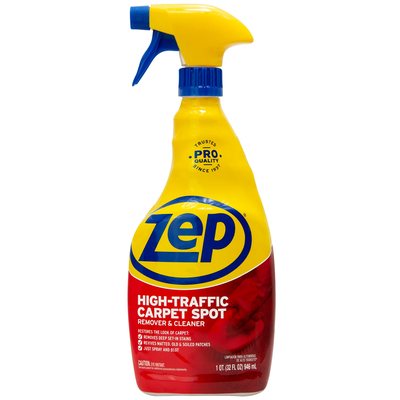
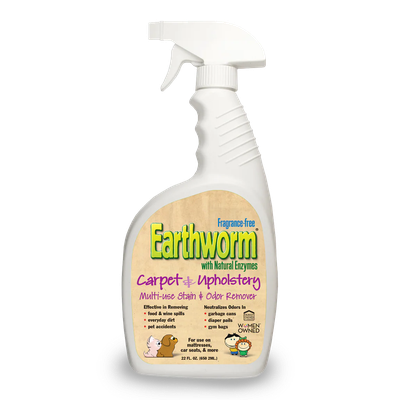
How to Use an Enzyme Cleaner on Carpet, Concrete and Upholstery
Cat Urine on Hardwood: Short Soaks, Not One Long One
The chemistry is the same as carpet. The physics is not, because wood swells and carpet does not.
Read the guideEnzyme Cleaner for Artificial Grass and Turf
Turf absorbs nothing. The urine passes straight through to the infill and the base, which is where the smell lives and where a trigger spray never reaches.
Read the guideEnzyme Cleaner for a Carpet Shampooer
A carpet machine sprays and sucks back on the same pass, so contact time is measured in seconds. The chemistry needs hours.
Read the guideEnzyme Cleaner for Concrete: Garage and Basement
A sealed slab holds the deposit where a mop reaches it. A bare slab took it somewhere no bottle reaches, and that decides the whole plan.
Read the guideEnzyme Cleaner for Mattress Stains and Smell
The chemistry is the same as carpet. The physics is not, because a mattress has nothing underneath it and no way to pull the water back out.
Read the guideEnzyme Cleaner for Upholstery: Read the Tag First
The chemistry is the same as carpet. The physics is not, because a cushion holds the water and carpet gives it back.
Read the guideThe guides share one rule and apply it to six surfaces: carpet soaks, everything else negotiates. Wood, mattresses and upholstery trade away standing liquid and buy contact time with repeats instead, and concrete and turf are the two that can take volume when the seal allows it. Start from the surface, then pick the method. The surface decides the format before any brand does.
Sources
| Claim | Citation | Tier | Read |
|---|---|---|---|
| Bio-Charge specifies a 4 to 24 hour dwell on carpet | Bridgepoint Bio-Charge instruction sheet | Direct or original source | |
| High heat in a steam cleaner deactivates the product's biological ingredients | Rocco and Roxie product FAQ | Direct or original source | |
| Do not use products with enzymes on hemp fabric | Jungmaven hemp fabric care instructions | Direct or original source | |
| Powder oxidation treatments are restricted to synthetic carpet, not wool or silk | HydraMaster technical article, authored by its VP of Marketing | Manufacturer source, conflict disclosed | |
| No manufacturer document we read names a dwell time for finished wood | Nature's Miracle 2017 and 2019 SDS, Rocco and Roxie 2022 SDS, Bissell 77X7 SDS, and both public ingredient lists | Direct or original source |