What Not to Mix With an Enzyme Cleaner
Bleach, first and for a reason that belongs to a hospital rather than a cleaning cupboard: hypochlorite meeting the ammonia in urine produces chloramine gas, and America's poison centers logged 75,186 chlorine and chloramine exposures between 2015 and 2022. Beyond that, anything that denatures protein works against you, because an enzyme is a protein: oxidizers, boiling water, high-acid descalers. The exception people miss is that a residue from a previous cleaner counts as a mixture, and it is already in the fiber.
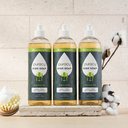
Three different problems get filed under one heading. One can put you in an emergency room, one wastes the bottle, and one does nothing at all.
Can You Mix Enzyme Cleaner With Bleach
No, and on a urine spot the reason is a hospital reason rather than a cleaning one. Hypochlorite bleach meeting the ammonia in urine produces chloramine gas. America's poison centers logged 75,186 chlorine and chloramine exposures between 2015 and 2022, with 12,540 emergency department visits, 1,511 admissions and 26 deaths.
Bleach also destroys the product you paid for. In a Novozymes patent, the detergent protease Savinase held zero percent of its activity after an hour at 25C in 5 parts per million of sodium hypochlorite. Alcalase held 10 percent at 5 parts per million and zero percent at 10. Five parts per million is 0.0005 percent. Read the sodium hypochlorite percentage on your own bleach bottle and the comparison makes itself.
The two objections to bleach run on different clocks. The gas is immediate and belongs to the ammonia already in the deposit, and the enzyme destruction is chemical and quiet, and either one alone is a reason to stop.
Bleach also fails the job it is being asked to do. It disinfects what it touches. What it touches is the top of a deposit whose working mass is in the pad, so the smell survives a treatment that was genuinely lethal.
The concentration arithmetic makes the enzyme point without any lab work on your part. Household hypochlorite runs whole percentage points, and the protease losses in the patent data start at parts per million, which is several orders of magnitude apart.
Nothing on the shelf needs the combination. Bleach has its jobs and enzyme products have theirs. The only place their schedules meet is the same square foot of carpet, which is the one place to refuse the pairing.
| Bleach | Dangerous and deactivating. |
|---|---|
| Bleach, effect on the enzyme | Savinase held 0 percent of its activity at 5 ppm sodium hypochlorite, Alcalase 10 percent at 5 ppm and 0 percent at 10 ppm |
| Hydrogen peroxide and oxygen cleaners | Deactivating, and enzyme-specific. Decisive against a live bacterial product |
| Disinfectants and quats | Deactivating. A biocide kills a live bacterial product outright |
| Vinegar | The myth. Subtilisin is inactivated below pH 4, so pooled vinegar is a bad start. |
| Ammonia | Not a strong chemical objection. |
| Heat and steam cleaners | Deactivating. Rocco and Roxie says high heat can deactivate its own biological ingredients |
| Baking soda, Febreze, dish soap | Pointless rather than harmful. They cost money and leave the deposit |
What Actually Kills an Enzyme and What Only Sounds Like It Does
Three categories, and the category matters more than the list.
- Dangerous:
- Produces a gas or a burn. On a urine spot that is bleach, because hypochlorite meets the ammonia in the deposit. Household acid meeting hypochlorite accounts for 48.9 percent of confirmed isolated chlorine gas exposures in the poison-center data.
- Deactivating:
- Kills the product, produces no hazard, wastes your money. Hypochlorite, oxidizers, disinfectants and heat all sit here.
- Pointless:
- Costs money, does nothing, harms nothing. Baking soda and masking sprays sit here.
The mechanism behind the deactivating column has been known since 1985. Subtilisin proteases are inactivated when a methionine beside the catalytic site is oxidized, which Estell, Graycar and Wells published in the Journal of Biological Chemistry.
The categories protect different interests. Danger protects the occupant, deactivation protects the purchase, and pointlessness protects nothing but deserves naming because it spends money that solves nothing.
Deactivation by oxidation has a known mechanism. The vulnerable sulfur-bearing amino acid beside the cutting site takes the hit. Once it is oxidized the shape no longer fits the bond it was built for, which is death for a tool defined by shape.
Sorting by category beats sorting by brand names. A new product with an unfamiliar label still lands in one of the three. The reader who sorts by mechanism makes the call without waiting for a blog to test it.
Pointless pairings are worth naming because they feel like diligence. Layering neutral materials onto a spot reads as thorough. The cost is not the hazard but the delay: days spent on steps that were never going to move the deposit.
Why Peroxide Matters More Than Vinegar on the Same Spot
Vinegar is the warning everybody repeats. Peroxide is the one that decides outcomes, and the difference depends on which kind of product you bought.
For a purified enzyme the published data conflicts by an order of magnitude and we print all of it. One alkaline protease retained 9.66 percent of its activity in 1 percent hydrogen peroxide. A Bacillus subtilis alkaline protease retained 97 percent after an hour in 1 percent. A third increased by 450 percent in 50 millimolar peroxide. Nobody can tell you which protease is in a consumer bottle, because no consumer product we read names its enzyme.
For a live bacterial product there is no ambiguity. A 2024 probiotic cleaning patent states outright that hydrogen peroxide is a natural antimicrobial and would kill the probiotics. Drugstore peroxide is 3 percent, and most pet products sold as enzyme cleaners are bacterial.
The warning should track the product type, and mostly it does not. Vinegar's harm is a pH problem that time and air largely undo, while peroxide's harm is an oxidizing residue that a live culture does not survive. The two are not peers.
The published enzyme data conflicts because the enzymes differ. Protease is a family rather than a molecule, and peroxide tolerance swings across that family by an order of magnitude, so a general claim in either direction overreaches.
The bacterial case is where the asymmetry becomes decisive. A product built on live organisms has no tolerance discussion to have. The oxidizer is antimicrobial by definition, and the dose already in the fiber is the dose that matters.
Practical guidance falls out of the asymmetry. Worry in proportion to what the bottle actually contains. Where the label is silent, treat the spot as if the surviving chemistry matters more than the residue you can smell.
What You Need Before You Switch Chemistry on the Same Spot
- Clear cool water and a spray bottle:
- The rinse is the whole intervention and it costs nothing. **Four white cotton towels:** To blot the rinse out and to read what is coming up. **Time:** Let the area dry fully before you treat. Treating into a wet oxidizer is the sequencing error that wastes the second bottle as well as the first. If you are replacing a product rather than rescuing one, buy a format that lets you pour.
The rinse is the whole intervention, and its power is that it changes conditions rather than adding to them. Clear water dilutes residue, carries loose residue off, and leaves behind nothing that the next product has to survive.
Towels make the rinse visible. Each pass shows what is coming up, and the sequence from gray to clean tells you when the history has been cleared without guessing at it.
Drying is part of the switch rather than a delay before it. A wet film keeps whatever it holds available, and treating into it re-creates the mixing problem the rinse just solved. The day of drying is the cost of a clean test.
Patience is the hard tool on the list. The instinct after a failed treatment is immediate action, and the correct move is a pause measured in hours while the fiber returns to a known state.
The format note rides along because the second bottle is the one that should count. If the first failed on delivery, the replacement should be a container that pours, or the rinse will have fixed the chemistry for nothing.
How to Treat a Spot That Already Had Something Else on It
Sequencing is the question this category answers least often, and it has a procedure rather than a warning.
The procedure is built around one idea: establish what is in the fiber, remove what you can, and only then apply a single chemistry to a known surface. Every step is that idea at a different scale.
Identification comes first because everything branches on it. Bleach residue changes the safety picture, peroxide changes the biology picture. A neutral residue changes nothing, and no later step knows which case it is in until this one is answered.
Ventilation before intervention is a safety order. If bleach met urine in that spot, the room's air is the first thing to fix, and adding product to a confined space comes after the space is breathable.
Multiple light rinses beat one heavy one. Each pass of water and each blot removes a fraction of what is loose, and stacking passes clears the film without driving it deeper, which a flood can do.
The drying interval is the boundary between old chemistry and new. Wet residue keeps reacting, and a treatment poured into it inherits reactions rather than starting clean. The wait is what makes the next pour a test rather than a mixture.
One product for the full window converts the retreat into an experiment with one variable. Judging at the interval rather than mid-dwell protects the result from the urge to intervene, and the urge is strongest right where the data is being generated.
The order is cheap to follow and expensive to skip, which is the whole argument for numbering it.
-
Stop and identify what went down.
1 identification
-
If anything containing bleach is still wet on a urine spot, ventilate the room and leave it before you add anything at all.
0 additions
-
Rinse with clear cool water, 2 to 3 passes, blotting between each with a dry white towel.
2 to 3 passes
-
Blot until a fresh towel pressed in for 5 seconds comes up nearly dry.
5 seconds
-
Let the area dry fully before treating.
24 hours
-
Treat with one product only.
4 to 24 hours
-
Do not add a second chemistry during the dwell. Give the treatment the full window before judging it.
1 product
-
If you are using a concentrate, mix at the stated ratio and no stronger.
16 ounces per gallon
Why Vinegar Gets Blamed and Peroxide Gets Missed
This is a thinking step rather than a doing step, because the warning the category repeats is the wrong one.
When a comment claims a prior chemical killed the enzyme, vinegar is named 15 times and peroxide 10, under the key prior_chem_denature_claim. Those are owner opinions rather than measurements.
The literature supports a narrow version of the vinegar warning. HERA records that subtilisin proteases are inactivated below pH 4. Outside that floor, protease pH tolerance is broad: a published alkaline protease held over 70 percent of its activity from pH 6.0 to 10.5 across two hours.
What nobody publishes is a recovery figure. So the honest instruction is the cheap one: rinse it out or let it dry, then soak. Save the worry for the oxidizer.
The blame distribution has a history rather than a mechanism. Vinegar's failure is visible, fast and smell-linked. It gets named in the stories people tell, while peroxide's failure is invisible and slow and reads as a product that did not work.
Counts of opinion encode that asymmetry. Owners naming chemicals describe what owners noticed, not what killed what, and the page carries the counts with that limit attached.
Confidence should be spent where the evidence sits. The vinegar warning deserves a rinse, the peroxide warning deserves a rethink, and treating the two identically wastes caution on the wrong one.
How to Tell Whether a Prior Chemical Ruined the Treatment
You cannot test for a dead enzyme at home, so test the outcome and use the timeline as the evidence.
- Treatment reached the deposit and stayed wet, and the smell is unchanged at 48 hours:
- A prior chemical is now a live suspect. It is the only cause a rinse fixes for free.
- Rinse, dry, retreat once, and the smell drops:
- That was the answer, and it cost you a bottle rather than a carpet.
Run the rinse before you conclude anything about the product.
Timeline reasoning is the home instrument. A laboratory can assay residual activity, and a household can watch what happens across a rinse, a dry and a retreat, which produces the same routing decision with different tools.
The unchanged-at-48-hours outcome is the signature that elevates chemistry to a suspect. Delivery and dwell failures improve the smell at least briefly, and a flat result across a correct pour points at conditions in the fiber rather than at the pour.
The recovery after a rinse is conclusive in the practical sense. Chemistry was the author, the rinse removed it, and the bottle that worked afterward was the same bottle that failed before it.
The no-change branch redirects rather than acquits. When rinse and retreat produce nothing, the depth explanation takes over, and the corpus counts say most failures land there, with the commercial skew that disclosure exists to flag.
The rinse costs an afternoon and answers a question no bottle can. Run it before blaming the product, because the free explanation deserves to die first, and a retreat on clean ground tells you whether the chemistry was ever the problem. Most failed treatments come back clean on the second pour, and the bottle was innocent the whole time.
What to Do If the Sequence Already Went Wrong
Every branch below ends in an action, and three of the four cost nothing but a rinse and a day.
A sequencing mistake is recoverable in most cases, and the recovery is boring: stop, identify, rinse, dry, retreat once. The branches put the specifics under that spine.
Stop comes first because stacking is the default instinct under regret. The moment a mistake is recognized, the damage is already as old as the mistake, and adding a third chemistry converts a readable situation into an unreadable one.
Identification sets the branch. Bleach sets the safety branch, peroxide sets the biology branch, disinfectant sets the residue branch. Vinegar sets the patience branch, and each of those has a different cost and a different clock.
The rinse-and-day branches cost nothing but time. Most sequencing errors clear with water and a drying interval. The discipline is in leaving the spot alone while the fiber returns to a state a product can work in.
Retreating once, correctly, is the test of the whole recovery. It has to be a real pour with a real dwell, because a cautious half-application after a mistake tells you nothing about whether the chemistry was ever the problem.
Judging follows the standard schedule rather than the anxiety schedule. The evidence the recovery generates arrives at the interval, and reading it early produces the same noise any early read produces.
The tree reads as a whole and acts one branch at a time. That split between diagnosis and action is what keeps a bad afternoon from becoming a bad month.
-
Bleach or a bleach-containing cleaner went onto a spot where a pet urinated.
Why: Hypochlorite meets the ammonia in the deposit and produces chloramine.
What to do: Ventilate the room and add nothing else.
-
An oxygen cleaner, hydrogen peroxide or a peroxide-based spray was used before the enzyme cleaner.
Why: If the product is a live bacterial one, peroxide kills the active ingredient.
What to do: Rinse with clear cool water, blot, let the area dry fully, then treat and cover for 4 to 24 hours.
-
A disinfectant or a quat-based spray went down first, or the product itself is preserved with a biocide.
Why: A biocide destroys a live bacterial product. Biocides are also validated on previously cleaned nonporous surfaces, which a urine-soaked carpet is not.
What to do: Rinse and dry, then treat. Stop using a disinfectant as an odor tool: it is the wrong instrument for a porous, soiled surface.
-
Vinegar was used on the spot and the enzyme cleaner did nothing afterwards.
Why: Possible but overstated.
What to do: Rinse the area with clear cool water or let it dry completely, then soak.
What Not to Do When Combining Cleaning Products
- Do not use ammonia on a cat's spot:
- The objection is behavioral rather than chemical, and it is the stronger one. Ohio State's Indoor Pet Initiative puts it plainly: the smell may attract the cat to that area. High-alkaline subtilisins work at pH 12, so the chemical case against ammonia is weak and we are not going to pretend otherwise.
- Do not reach for a disinfectant as an odor tool:
- Mark Cornelius, an IICRC-approved instructor, gives the reason in Cleanfax: almost every biocide is tested on previously cleaned nonporous surfaces. A urine deposit in a carpet is neither.
- Do not run the product through a steam cleaner:
- Rocco and Roxie says the high heat can deactivate the biological ingredients.
- Do not water down a ready-to-use bottle:
- It is already at working strength.
- Do not layer products hoping for a combined effect:
- Of the 499 effectively unanswered enzyme threads we read, 150 are about combining or sequencing products.
Each ban protects a different mechanism. Ammonia protects the animal's training, biocides protect the culture, heat protects the enzymes, dilution protects the dose, and layering protects the reader's ability to learn anything from the next treatment.
The disinfectant ban is the least intuitive and the easiest to justify. A biocide is tested on clean hard surfaces by design, and a loaded carpet meets neither condition, so the label's confidence transfers to nothing in the room.
The layering ban has an evidence cost as well as a chemistry cost. Every added product removes one variable's signal, and the reader who layered three things has no way to know which one worked, failed or interfered.
Steam fails through its temperature rather than its mechanics. The machine moves water well and kills the biology that would have used the water. That makes it the wrong first move and a reasonable later one once the dwell is done.
When the Product Combination Is Not the Problem
So rinse, dry and retreat correctly. If the smell still comes back on warm days after three properly executed soakings, the mixing question is closed and the depth question is open.
Mark Cornelius frames the next decision by asking what the carpet is worth, and answers the cost objection in three words: "Carpet underlay is cheap."
If a cat has recently started urinating outside the box, see a vet before you buy or mix anything.
Closing the mixing question is a milestone rather than a consolation. It removes the cheapest explanation, which is also the one a reader can act on for free, and what remains is the explanation that needs different tools.
Run it once with full execution, and the result carries the verdict for the whole chemical-history question.
Three proper soakings with the smell intact moves the location of the problem downward. Depth replaces sequence as the explanation, and depth answers to a pry bar and a pad price rather than to a bottle.
The trade's cost framing arrives exactly here. Once the failure has stopped being chemical, the spending question changes instruments, and the underlay answer prices the change honestly.
The medical line stands regardless of the chemistry. A new outside-the-box habit is a symptom with its own diagnosis path, and no sequence of cleaning products intersects it.
The closure also frees the budget. Money that was cycling into repeat bottles moves to the one purchase that answers depth, which is the pad, and the smell question becomes a materials question with a materials price. That is the honest end state of a mixing investigation, and reaching it on three soakings rather than ten is the win.
What a Sequencing Mistake Costs
- The rinse that fixes it:
- Free. Water, towels and a day.
- The wasted treatment:
- $2 to $8 of product poured onto a spot that was never going to respond.
- The replacement course after the rinse:
- Most of one 128 ounce jug across three cycles, and the one pet product we hold in that size ran $37.49.
- Lifting the carpet and replacing the pad:
- Priced per square foot by the installer. Angi and HomeGuide both were unavailable during our dated review, so we are not printing a number we did not read.
The expensive version of this mistake is not the wasted bottle. It is concluding from a poisoned test that the whole category does not work.
The cheap end of the scale is genuinely cheap. The rinse that fixes most sequence errors costs tap water, towels and a day, which is why running it before concluding anything is the highest-return move in the whole category.
The middle of the scale is product spent against conditions that guaranteed failure. Pouring onto an oxidized or acid-loaded fiber is not a treatment with a poor outcome, it is a non-treatment with a receipt, and it prices out per wasted pour.
The expensive end is not the pad. It is the conclusion drawn from a poisoned test: that the category failed, when the conditions were never valid for it. That conclusion costs a replacement floor or a permanent smell, and both dwarf the installer's bill.
Price the mistake at the decision that caused it. A rinse skipped is a bottle lost, a bottle misread is a carpet replaced. Every line on the scale is downstream of a sequence choice rather than a product choice.
$0 to $59.97 Typical spend on this job
The rinse that fixes a sequencing error is free. A replacement three-cycle course consumes most of one jug, and the one pet product we hold in that size ran $37.49.
What We Could Not Verify on This Page
Two gaps we did not fill. No experiment we found measures how much of a detergent protease recovers after exposure at around pH 2.5. No source publishes the residual pH of a carpet after vinegar dries. We searched for both and are stating the absence rather than filling it.
Both gaps live under the vinegar question, and both would be settled by a measurement rather than an opinion. What recovery looks like after acid exposure, and what pH a carpet holds after vinegar dries, are numbers, and nobody has published them.
The practical instruction absorbs the gaps. Rinse or dry, then soak, costs nothing and is correct in every case the gaps leave open, which is the property that makes it publishable without the missing figures.
The gaps also bound the argument. Without a recovery figure, the page cannot say how much vinegar damage is permanent, so it does not. The reader gets the safe instruction rather than an inflated claim in either direction.
Stating the absence is the cheap form of honesty and the rare one. The category's habit is to fill exactly these holes with confident numbers, and every filled hole makes the next reader's rinse decision worse.
A recovery figure would also change the language of the warning. With a number, the page could say how much is lost and how much returns; without one, the page says what to do. The doing is what the reader controls.
Absence that has been stated is a finding, and a finding can be re-checked cheaper than a carpet can be replaced.
| Claim | Source | Tier |
|---|---|---|
| Savinase held 0 percent residual activity at 5 and 10 ppm sodium hypochlorite, and Alcalase 10 percent at 5 ppm and 0 percent at 10 ppm, at 25C for 60 minutes. Novozymes patent US5856167A | patents.google.com | Direct or original source |
| Subtilisin is inactivated by oxidation of the methionine adjacent to the catalytic serine. Estell, Graycar and Wells, Journal of Biological Chemistry 260(11):6518-6521, 1985 | pubmed.ncbi.nlm.nih.gov | Direct or original source |
| An alkaline protease retained more than 70 percent activity across pH 6.0 to 10.5 but only 9.66 percent in 1 percent hydrogen peroxide | pmc.ncbi.nlm.nih.gov | Direct or original source |
| A Bacillus subtilis alkaline protease retained 97 percent of its activity after one hour in 1 percent hydrogen peroxide | pubmed.ncbi.nlm.nih.gov | Direct or original source |
| A detergent protease increased activity by 450 percent in 50 millimolar hydrogen peroxide, which is why the peroxide effect is enzyme-specific | pubmed.ncbi.nlm.nih.gov | Direct or original source |
| Hydrogen peroxide is a natural antimicrobial and formulations combining it with live probiotics would be ineffective because the peroxide would kill the probiotics | patents.google.com | Direct or original source |
| Subtilisin proteases are inactivated below pH 4, and finished household products carry roughly 0.007 to 0.1 percent subtilisin by the A.I.S.E. survey HERA cites | heraproject.com | Direct or original source |
| America's poison centers logged 75,186 chlorine and chloramine exposures from 2015 to 2022, with 12,540 emergency department visits, 1,511 admissions and 26 deaths, and household acid meeting hypochlorite accounted for 48.9 percent of confirmed isolated chlorine gas exposures | pmc.ncbi.nlm.nih.gov | Direct or original source |
| Never use ammonia or ammonia-based products on the carpet, because the smell may attract the cat to that area and can encourage cats to urinate in the area. Ohio State Indoor Pet Initiative | indoorpet.osu.edu | Direct or original source |
| Almost every biocide is tested on previously cleaned nonporous surfaces. Mark Cornelius, IICRC-approved instructor, in Cleanfax, who also asks what the carpet is worth and notes that carpet underlay is cheap | cleanfax.com | Secondary source |
| Rocco and Roxie does not recommend its product in a steam cleaner because the high heat can deactivate the biological ingredients | roccoandroxie.com | Direct or original source |
| Bio-Charge mixes 16 oz per gallon of water and dwells 4 to 24 hours under plastic | spec-sheets.interlinksupply.com | Direct or original source |
| Bio-Release dilutes 1 to 4 for a room prespray, and 1 to 1 through 1 to 3 depending on dwell time and severity | interlinksupply.com | Direct or original source |
| Sequencing and combining products account for 150 of the 499 effectively unanswered enzyme threads, ahead of machine pairing at 88 and substrate safety at 53 | /about/ | Direct or original source |
| Product prices, sizes, per-ounce figures, buyer ratings and enzyme-evidence levels | /about/ | Direct or original source |
| No experiment measuring percent recovery of a detergent protease after exposure at around pH 2.5 was found, and no published figure exists for the residual pH of a carpet after vinegar dries. Searched August 19, 2026 | /about/ | UNVERIFIED |
| Per-square-foot carpet pad replacement pricing could not be retrieved: angi.com and homeguide.com both was unavailable during our dated review on August 19, 2026 | angi.com | UNVERIFIED |
- What we believe
- Bleach on a urine spot is a safety matter, oxidizers and disinfectants are the real enzyme killers, and vinegar is a rinseable pH problem.
- What would change our mind
- A published measurement of residual protease activity, or of bacterial viability, on carpet fiber after vinegar has dried on it.
- What we could not verify
- Any percent-recovery figure for a detergent protease after acid exposure, and any residual carpet pH after vinegar dries.
Frequently Asked
What not to mix with enzyme cleaner?
Bleach first, because on a urine spot hypochlorite meets ammonia and makes chloramine gas. Then oxygen cleaners, hydrogen peroxide and disinfectants, all of which kill a live bacterial product. Then heat, because high heat in a steam cleaner deactivates biological ingredients. The order of that list is the order of damage. Bleach on ammonia is a hazard, the oxidizers are a waste of product, and heat is a slow loss of activity. All three are avoided the same way: rinse, dry, and switch chemistry deliberately.
Can enzyme cleaner be diluted?
Only if it is sold as a concentrate, and then at the stated ratio. Bridgepoint's Bio-Charge mixes 16 ounces per gallon of water, and its Bio-Release dilutes 1 to 4 for a room prespray. A ready-to-use consumer spray is already at working strength. Dilution also has a delivery cost. Watering a ready-to-use spray extends the bottle and shrinks the dose per spot, which trades a saving for a failure. The concentrate route gives the same money more working liquid instead.
What should you never mix with bleach for cleaning?
Ammonia, any ammonia-based cleaner, and any acid including vinegar. Household acid meeting hypochlorite accounts for 48.9 percent of confirmed isolated chlorine gas exposures in the poison-center data. Pet urine already contains ammonia, which makes a urine spot the same hazard. Ventilate, rinse, and keep the two chemistries in separate rooms if the sequence gets complicated.
Can I mix vinegar and enzyme cleaner together?
Do not mix them in the same container. Applying vinegar and then an enzyme cleaner to the same spot is usually fine once the vinegar is rinsed or dry, because subtilisin is only inactivated below pH 4. Peroxide is the chemical worth avoiding here. The rinse is what makes layering survivable rather than lucky. Clear water through the spot, blotted back out, resets the ground under the next product. Skip it and the label directions stop describing what is actually in the fiber.
More on the same problem in The Science.