What a Biological Laundry Detergent Contains, and When a Non-Bio Beats It
A biological detergent is an ordinary detergent with enzymes added. Protease handles protein, amylase handles starch, lipase handles fats and cellulase works on cotton fiber. Finished household products carry roughly 0.007 to 0.1 percent subtilisin, and the label almost never says which enzymes are in yours.
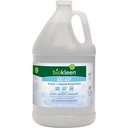
Biological means enzymes are in it. Which enzymes, and how much of each, is the thing no label on the shelf tells you.
What a Biological Laundry Detergent Actually Contains
The same surfactants, builders and brighteners as any other detergent, plus a small dose of enzymes. Non-biological is that product with the enzymes left out.
The dose is genuinely small. Finished household products carry roughly 0.007 to 0.1 percent subtilisin by the industry survey HERA cites, which is the right order of magnitude for enzyme chemistry rather than a shortfall.
What the label will not tell you is which enzymes are in the bottle in front of you. No consumer detergent we read publishes an activity figure or a full enzyme list.
The difference between the two products is one ingredient class, and everything else follows from it. Surfactants, builders and brighteners do the lifting, brightening and water-softening in both, and the enzymes add cutting.
Small dose is the design rather than a shortfall. Enzymes are catalysts, which means they work repeatedly rather than being consumed per stain, and a fraction of a percent processes soil across a whole wash.
The label gap is the industry's, not the reader's. Which classes are present and at what activity is the information a buyer would need to compare products, and no bottle in the category prints it.
Non-bio is a defined absence rather than a different formula family. The same detergent frame without the enzyme dose, sold alongside it, and the choice between them is a task choice rather than a quality ranking.
Reading the shelf becomes a category decision rather than a comparison. The buyer picks bio for organic soil families and non-bio for protein fibers and sensitive skin, and the label's silence about activity makes deeper comparison impossible.
| What biological means | Enzymes have been added to an otherwise ordinary detergent. |
|---|---|
| How much enzyme | Finished household products carry roughly 0.007 to 0.1 percent subtilisin by the industry survey HERA cites |
| Working temperature | Detergent amylase runs 86 to 140F. |
| Working pH | A published subtilisin protease is active from pH 6.0 to 12.0 and inactivated below pH 4 |
| Where it beats non-bio | Protein, starch and fat: blood, grass, egg, milk, gravy, sauces, body oil and collar soil |
| Where non-bio wins | Wool and silk, which are protein fibers a protease digests, and skin that reacts to a residue |
| What no label tells you | Which enzymes are in your bottle and at what activity. |
| Do not combine with | Bleach in the same load. |
Which Enzyme Handles Which Stain
Four classes appear in laundry, each defined by the one bond it cuts.
- Protease:
- Breaks down protein, which covers blood, grass, egg, milk, sweat and most collar soil.
- Amylase:
- Breaks down starch, which is most of what gets spilled at a table.
- Lipase:
- Breaks down fats and oils, which is body soil, gravy and sauce.
- Cellulase:
- Shaves fuzz off cotton fiber, releasing trapped soil rather than removing a stain.
Each one only cuts its own substrate. That is why a detergent with one enzyme is good at one family of stains and unremarkable on the rest.
The matching is mechanical. Each class cuts one bond type, and stains sort by chemistry family rather than by appearance, which is why the pairing reads like a menu rather than a ranking.
A mixed stain needs the classes it needs. Gravy is fat and starch, collar soil is protein and oil, and a detergent carrying several classes addresses the mixture rather than a component.
Cellulase is the odd one and worth understanding. It acts on the cotton rather than the soil, releasing what fuzz holds, which is brightness maintenance rather than stain removal.
One-enzyme products are honest rather than deficient. They cover the family they cover, and a buyer matching a specific stain to a specific class gets more from the match than from a broad blend used blindly.
The buyer's practical takeaway is classification before selection. Name the stain's family, then check which classes the label names, and the purchase follows from the matching rather than from the front of the pack.
When a Biological Detergent Beats a Non-Bio
On anything organic that a surfactant only lifts rather than cuts.
Blood, grass, egg, milk, gravy, sauces and collar soil are all protein, starch or fat, and a hydrolase takes each apart into pieces small enough for water to carry off. A non-bio has to lift the same soil intact.
The honest counterweight belongs on the same page. Wirecutter's position is that the presence of lipase alone did not predict a detergent's effectiveness, so an ingredient list is a weak signal about how well a product performs.
And the mechanism has a cost. Protease digests protein, and wool and silk are protein, so a biological detergent is the wrong choice on both.
Cutting and lifting are different physics. A surfactant surrounds what it can reach and carries it into the water, and an enzyme dismantles what it contacts into pieces the water takes regardless.
Organic soils reward cutting because they anchor. Protein and starch bond into fiber, fat penetrates it, and lifting struggles exactly where the bonding is strongest, which is the collar and the cuff.
The counterweight on the record is about labels rather than mechanisms. Ingredient presence is a weak predictor of performance, which makes the buyer's attention better spent on dose and contact time than on enzyme lists.
The cost of the mechanism is selectivity running both ways. The same protease that clears blood attacks wool, and the buyer's gain on cotton towels is a loss on a protein sweater.
The choice is task-shaped. Soil families on one side, fiber families on the other, and the detergent follows the load rather than the habit.
What to Look For on the Bottle
- The word enzymes or a named class:
- Some labels name protease or amylase. Most say only enzymes, and a few say nothing at all.
- A stated pH or working temperature:
- Rare, and worth more than any marketing line on the front.
- A cold-wash claim:
- Read it against the fact that detergent amylase runs 86 to 140F, which a cold cycle sits below.
- A sensitive or non-bio line from the same brand:
- That is the label to keep for wool, silk and anyone in the house whose skin reacts.
Our catalog carries enzyme laundry detergents with the level of evidence we hold printed on every product page. That is named by the manufacturer, stated on a retail listing, or inferred from the product line.
Label reading here is a low-information environment handled honestly. Name what is named, treat silence as silence, and let the stated facts, pH or temperature, carry what they can.
The cold-wash claim has a checkable edge. The working band is published for a class. A cold cycle in a cold house can sit below it, so the claim and the band belong in the same thought.
The sibling non-bio line is a feature of the brand rather than a marketing trick. It gives the household the same base formula with the enzyme class removed, which is exactly the control the wool-and-silk rule needs.
The excluded cases are fiber and skin physics again. Protein fibers meet protease as substrate, and a skin reaction investigation changes variables one at a time, starting with the residue formers rather than the catalysts.
How to Get the Most Out of a Biological Detergent
The lever is contact time, not dose and not the temperature dial.
Every step defends contact time or protects the chemistry's conditions. Pretreat extends it, temperature stays inside the band, dose stays at the label, and the exclusions keep bleach, acid and coating out of the working window.
Pretreating is where the time is won. The wash itself runs minutes, and a presoak or a dabbed concentrate held on the stain adds the hours the cycle cannot offer.
Dose discipline is chemistry rather than thrift. Excess product does not rinse fully, and the residue it leaves is the matrix that holds soil in the next load, which is how overdosing compounds.
The two chemistry exclusions are the carpet rules returning. Bleach at parts per million kills the class, acid below the floor inactivates it, and a wash load is as vulnerable as a carpet spot to both.
Softener exclusion on soiled loads is the coating rule again. What it deposits is what the enzymes are clearing, and adding it mid-treatment rebuilds the problem the wash is solving.
The dryer check is the permanence gate. A visible stain that goes through heat becomes a fixed one more often than not, and the check costs a look while the garment is damp.
Set the conditions once and leave the dial alone. Inside the band, temperature is spent, and the reader's attention moves to the two levers that still pay: time and interference.
Habits carry the method further than settings do. The reader who fixes their presoak, dose and dryer behavior has changed everything that matters while touching nothing on the machine.
-
Pretreat or presoak anything set in.
30 minutes minimum
-
Set the wash temperature the garment label allows, then stop tuning it. Detergent amylase runs 86 to 140F, and no setting inside that band substitutes for soak time.
86 to 140 F
-
Dose to the label rather than above it. Excess detergent does not rinse out and the residue holds soil.
1 labeled dose
-
Keep bleach out of the same load.
5 parts per million
-
Keep vinegar out of the same load. A published subtilisin protease is inactivated below pH 4.
4 pH floor
-
Skip fabric softener on anything that already smells. The coating holds the soil the enzymes are there to remove.
0 softener doses
-
Check the garment before it goes in the dryer. The American Cleaning Institute says to keep an item out of the dryer until the stain is removed, because a dried-in stain is often permanent.
0 dryer cycles on a visible stain
What a Cold Wash Changes for a Biological Detergent
Water temperature is not the lever the packaging implies. Detergent amylase runs 86 to 140F, and a cold cycle in a cold house can sit below that band. No consumer detergent we read publishes a working temperature range, so nobody can tell you what a cold cycle costs the one in your machine.
The band has a top as well as a bottom, so a hot cycle is not the answer on the other side.
The reaction runs only while the fabric is wet. That is why a presoak does more for a set stain than any setting on the dial.
The band reframes the cold-wash conversation. Cold is not a gentler version of warm for this chemistry, it is potentially outside the working range entirely, and a house's cold varies by season.
The unpublished range is the practical problem. No brand prints the working temperature for its own blend, so the reader cannot know where their machine's cold sits relative to it. The page says that rather than guessing.
The top of the band matters as much as the bottom. Above it nothing improves and the fabric pays, which is why the hot cycle is not the compensation the dial implies.
Wet time remains the lever under any temperature. The reaction runs while the fabric is wet and the chemistry is present, and a presoak at a workable temperature beats a wash at an extreme one in either direction.
A cold-water household has a specific remedy. A basin, a tap and a soak restore the working temperature for the part of the load that needs it, without changing the machine's habits for the rest.
How to Tell Whether a Biological Detergent Is Working
Test it against itself rather than against a claim.
Take two similar soiled items. Presoak one for an hour in the same detergent and wash both in the same load. If the soaked item comes out visibly better, contact time is your lever and the product is fine.
Judge everything dry and in daylight, because wet fabric hides a residual mark and fragrance hides a residual smell.
If both items come out the same and both are still marked, the stain is the wrong family for the enzymes in that bottle. It may also hold fewer of them than the front of the pack implies.
The paired test is a controlled experiment in miniature. Same load, same wash, one item soaked, and the difference between the two items isolates contact time as the variable.
The logic generalizes past the first run. A clear difference says time is the lever and the product is fine, and no difference says the question is the stain's family or the dose, in that order.
Dry daylight judging removes both masks. Wet fabric hides marks and fragrance hides smells, and both masks are strongest at the moment a load comes out of the machine.
The failure reading is informative rather than final. Two identically marked items mean the enzymes in that bottle do not address that stain, or are present below any useful activity, and both readings redirect the next wash.
Run the test before replacing the product. A household that tests keeps its detergent and fixes its method, and a household that does not test shops, and the test is one basin and one hour.
Why the Biological Detergent Did Not Shift the Stain
Four branches, and only one is the detergent.
The branches separate the bottle from the conditions, and the conditions run first. Time, temperature and interference are checkable facts about the wash, and the formulation is a guess about the factory.
The unchanged branch asks the family question. A stain outside the enzyme families in that bottle cannot move regardless of execution, and classification precedes chemistry.
The lifted-a-little branch is the time signature. Partial movement means the mechanism is engaged and under-resourced, and the proportionate response is a longer soak rather than a different product.
The cold branch is the band problem in a specific costume. A winter cold wash can sit below the working range with the chemistry intact and idle, and the reading is a temperature finding, not a product one.
The damaged-wool branch is the mechanism working wrongly. Protease clearing a protein stain from a protein fiber is the same event viewed from two sides, and the branch routes to the non-bio route that should have been first.
Match the branch, change the one variable it names, and re-judge. Stain work is cheap to iterate and hard to read in parallel, and one clean change per wash keeps the readings separable.
Every branch except the damaged one is recoverable, which is the quiet point of the tree. Wool that met protease is the only reading that ends the garment's story rather than its wash cycle.
Order the reading the way the branches run: conditions first, family second, formulation last. Most stains stop at the first two, and the shelf gets blamed for failures it did not cause.
-
The stain is unchanged after a normal wash with a biological detergent.
Why: The enzymes did not get enough contact time. A cycle is minutes and a set stain wants a soak.
What to do: Presoak in the same detergent for at least 30 minutes, or several hours if the stain is old, then wash on the setting the garment label allows.
-
It lifted a little and stopped.
Why: The stain is the wrong family for the enzymes in that bottle, and no label tells you which ones are in it.
What to do: Match the chemistry to the soil: protein and starch and fat go to a biological, and rust, limescale and dye go to acid or an oxidizer.
-
You washed cold and nothing moved.
Why: A cold cycle in a cold house can sit below the 86 to 140F band detergent amylase works in, and the cycle is short either way.
What to do: Presoak first, for 30 minutes or several hours on an old stain, then rewash on the setting the garment label allows.
-
A wool or silk item came out damaged.
Why: Protease digests protein, and both fibers are protein. The detergent acted on the garment rather than the soil.
What to do: Switch to a neutral non-enzyme detergent for those fibers. The damage already done does not reverse.
What Not to Do With a Biological Detergent
- Do not use it on wool or silk:
- Protease digests protein and both fibers are protein. Use a neutral non-enzyme detergent.
- Do not add bleach to the same load:
- One detergent protease showed zero residual activity at 5 parts per million of sodium hypochlorite, at 25C for 60 minutes.
- Do not add vinegar to the same load:
- A published subtilisin protease is inactivated below pH 4.
- Do not read a peroxide booster as neutral:
- The published effect on protease conflicts by an order of magnitude across three papers, from 9.66 percent residual activity to 97 percent to a 450 percent increase. The effect is enzyme-specific and you cannot tell which enzyme you have.
- Do not dry a garment that still shows the stain:
- The American Cleaning Institute says a stain that has been dried is often permanent.
The bans protect the catalyst, the fiber and the future stain, in that order. Bleach and acid attack the first, the enzyme itself attacks the second when the fiber is protein, and heat finishes the third.
The peroxide point is epistemic rather than chemical. The published effects conflict across enzymes by an order of magnitude, and an unknowable enzyme in an unknown bottle makes the booster a coin flip rather than a booster.
Each ban also has a sequencing form. Acid before enzyme, bleach with enzyme, heat before the stain clears: the errors compound when combined, and each is cheap to avoid separately.
The neutral alternatives exist for every ban. Wool and silk get a non-enzyme detergent, the enzyme load gets a clean window, and the dryer waits for the nose and the daylight. None of it requires heroics.
When to Switch Back to a Non-Biological Detergent
Three cases, and each is a real reason rather than a preference.
Wool, silk and other protein fibers, where the enzyme acts on the garment.
A skin reaction in the house. The enzymes are not usually the risk. The surfactants, preservative and fragrance vary far more between products than the enzymes do, and a non-bio line from the same brand changes several variables at once.
A cold-water-only machine, where the working band for detergent amylase is out of reach.
- What it costs:
- The 6 enzyme laundry detergents in our catalog, which is the laundry category outside the Zep trade line and outside the boosters, ran $7.99 to $34.98 at prices read August 19, 2026. Non-bio lines from the same brands sit in the same range, so this is a fitness decision rather than a budget one.
Each switch case is a facts-first case. Fiber identity, skin symptoms and machine temperature are all observable before the next load runs, and the switch is a response to them rather than a preference.
The skin case deserves its careful framing. Enzymes are the least variable ingredients in the bottle, and the residue formers are the most, so the investigation starts where the variance is.
The cold-machine case is arithmetic. Below the working band the bio premium buys idle catalyst, and the non-bio at the same temperature loses nothing it was using.
$16 to $29.99 Typical spend on this job
The 6 enzyme laundry detergents in our catalog, which is the laundry category outside the Zep trade line and outside the boosters, ran $7.99 to $34.98 at prices read August 19, 2026. Non-biological lines from the same brands sit in the same range, so choosing between them is a fitness decision rather than a budget one.
- What we believe
- A biological detergent is worth buying for protein, starch and fat soils, and the enzymes matter less than the contact time you give them.
- What would change our mind
- A published head-to-head showing a non-biological detergent matching a biological one on blood, grass and body oil at the same temperature and dose.
- What we could not verify
- Which enzymes are in any given consumer bottle and at what activity, because no consumer detergent we read publishes a numeric figure.
What We Could Not Verify About Biological Detergents
No consumer detergent we read publishes an activity figure, a full enzyme list or a working temperature range. The concentration we quote is an industry survey figure rather than a reading off any bottle.
The disclosure gap defines shopping in this category. Activity, full class lists and working ranges are unpublished, so comparison stops at named classes and price, and the page treats that as the environment rather than complaining about it.
The survey figure is an industry-level number, not a bottle-level one. It establishes the order of magnitude of formulation, and it cannot tell any reader what is in the bottle in front of them.
Buyers work around the gap with behavior rather than information. Dose to the label, buy stock that moves, match the class names to the stain family, and rely on time, which is the variable the silence cannot take away.
The honest page states the gap where a competitor would print a table. Confidence about unknowable formulation is the category's marketing style, and the reader is better served by knowing what nobody knows.
What the category publishes instead is suggestion: word marks, marketing lines and the occasional named class on a back label. Suggestion is usable as a filter and useless as a specification, and the reader who treats it that way is shopping as well as the information allows.
The working assumption on every page is that an enzyme claim means an enzyme presence, no more. Strength, activity and blend remain unknown even where the class is named, and advice built on the assumption keeps its shape when the bottle disappoints.
A disclosure regime would change this record from guidance to comparison overnight. Until one arrives, contact time remains the lever that needs no label to work.
| Claim | Source | Tier | Read |
|---|---|---|---|
| Finished household products carry roughly 0.007 to 0.1 percent subtilisin by the A.I.S.E. survey HERA cites | heraproject.com | Direct or original source | Not dated |
| A published subtilisin protease is active from pH 6.0 to 12.0 and is inactivated below pH 4. Falkenberg et al., FEBS Open Bio 12(10):1729-1746, 2022 | pmc.ncbi.nlm.nih.gov | Direct or original source | Not dated |
| One detergent protease showed zero residual activity at 5 parts per million of sodium hypochlorite, tested at 25C for 60 minutes. US Patent 5,856,167 | patents.google.com | Direct or original source | Not dated |
| Hydrogen peroxide effects on protease are enzyme-specific and the published results conflict: 9.66 percent residual activity in one alkaline protease at 1 percent hydrogen peroxide, 97 percent in another, and a 450 percent increase in a third | pubmed.ncbi.nlm.nih.gov | Direct or original source | Not dated |
| Enzyme soak durations of at least 30 minutes, or several hours for aged stains; do not put an item in the dryer until the stain is removed; and stains that are dried will often be permanent. The guide states it was updated March 31, 2026 | cleaninginstitute.org | Secondary source | August 20, 2026 |
| Catalog sizes, prices and per-product enzyme evidence levels, read August 19, 2026 | enzymecleaningproducts.com | Direct or original source | Not dated |
Frequently Asked
What is bio-enzymatic detergent?
An ordinary detergent with enzymes added. Protease handles protein, amylase starch, lipase fats and cellulase cotton fiber. Finished household products carry roughly 0.007 to 0.1 percent subtilisin by the industry survey HERA cites. The enzymes are the difference between the two shelves, not the detergents themselves. Both bottles carry surfactants and builders, and only one carries anything that cuts soil into pieces water can carry away on its own.
What are two disadvantages of using enzymes in washing powder?
Two real ones. A protease digests protein, so wool and silk are at risk from the detergent itself. Enzymes also need time, so a short cycle gets less from them than the packaging implies. A biological detergent earns its keep in the bucket and the drum both, and only the drum half is on the label.
Is enzyme laundry detergent better?
On protein, starch and fat soils, yes, because a hydrolase cuts what a surfactant only lifts. The honest comparison is soil by soil. On protein, starch and fat it is better, and on everything else it matches the plain detergent beside it. The enzymes add cutting to a formula that already lifts, and lifting alone is what fails on the soils that bond.
What are biological enzyme detergents?
Biological is the shelf word for enzymes added. Non-biological is the same detergent without them, sold for wool, silk and skin that reacts. Neither label tells you which enzymes are in the bottle, and no consumer detergent we read publishes an activity figure. The label is a shelf distinction rather than a formulation standard. Two biological detergents can carry different enzyme sets at different doses, and the front of the bottle does not say which. Read the ingredients for the enzyme names when the job is a specific stain.
More on the same problem in Laundry and Fabric.