How to Get Blood Out of Fabric: Cold Water and Protease, in That Order
Cold water first, enzymes second, and the order is the method. The American Cleaning Institute publishes two different protocols for two different stains. Fresh blood: soak in cold water, and do not use hot water because it will set the stain.
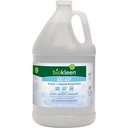
Blood is the one soil in this category where the enzyme and the stain match exactly. The order of operations is what people get wrong.
| Dwell time | Thirty minutes minimum in the soak, several hours for an aged stain, per the American Cleaning Institute's enzyme soak guidance |
|---|---|
| Volume of product | Enough water to move the item freely in the bowl. |
| Dilution | Follow the detergent label. |
| Water temperature ceiling | Cold on fresh blood, warm on dried blood. |
| Working pH range | One published subtilisin protease is active from pH 6.0 to 12.0 and inactivated below pH 4 |
| Surface compatibility | Cotton, linen and synthetics: proceed. |
| Time to result | One wash on a fresh stain. |
| Cost per treatment | $4.74 for a 22 oz enzyme stain spray, $7.91 for a 32 oz in-wash booster, $16.00 for a bio detergent refill |
What Blood Actually Leaves in Fabric
Blood is the cleanest match in this category, and it is worth saying plainly because most of this category is not.
Blood is also the one soil where the fresh and dried versions behave like two different substances. Fresh blood is a suspension that water alone can move, and dried blood is a film that has to be chemically taken apart. The whole method on this page rests on knowing which of the two you are holding.
- Hemoglobin:
- The protein in red blood cells. It carries the color and most of the visible mass of a fresh stain.
- Albumin:
- The main protein in plasma, and the part that dries into a stiff film welded to the fiber.
- Protease:
- The enzyme class that cuts peptide bonds, which is the bond holding hemoglobin and albumin together.
On cat urine we are careful to say enzymes do not destroy the smell molecule, because the sulfur compound has no bond a hydrolase can cut. On blood there is no such caveat.
The caveat free claim still has a state condition attached. Protease cuts what it can reach, and a dried film welded to cotton gives it far less surface than a soaked fresh stain. Reach and contact time are the variables the reader controls, and both grow in the dried case.
What changes everything is the state the stain is in. Fresh blood is still soluble and cold water carries a large fraction straight back out of the weave. Dried blood is a bonded film that no amount of rinsing lifts.
The two states explain why the page repeats one instruction: sort first, then treat. The fresh protocol is water and speed, the dried protocol is warmth, enzymes and patience, and each sabotages the other's stain. Mixing them is how a cleanable mark becomes a set one.
Why Cold Water Goes First on a Fresh Blood Stain
The American Cleaning Institute's stain guide gives the instruction and the reason in one line. For fresh stains: soak in cold water, and do not use hot water as it will set blood stains, then launder.
Cold water first is not a warm-up for the enzyme step. On a fresh stain the soak is the treatment, and it works because soluble protein follows water out of the weave without any chemistry at all. The enzyme step earns its place on the dried case, where rinsing alone has nothing left to reach.
For dried stains it gives a different instruction: pretreat or soak in warm water with a product containing enzymes, then launder. If the stain remains, rewash using a bleach that is safe for the fabric.
Two states, two protocols, and almost no page in this category separates them.
The separation is the useful part of the guidance. Most stain advice merges the fresh and dried cases into one instruction with the word treat in it, and the reader with a dried mark follows cold water steps written for a wet one.
Now the part we will not fake. Every article repeats that heat sets the stain permanently and none names a temperature. We searched PubMed on August 19, 2026 for "blood stain fabric temperature set removal laundry" and for "hemoglobin denaturation textile stain removal temperature", and both returned zero records. Use cold on fresh blood because every laundry authority says to, not because somebody found a threshold.
That distinction is what makes the instruction trustworthy. A rule held by every authority with no published mechanism is still a rule worth following on a shirt you care about, and the honesty about the gap costs the reader nothing. A number somebody invented would cost more.
What You Need to Get Blood Out of Fabric
A bowl and cold tap water do most of the work on a fresh stain. The product matters on a dried one.
The fresh protocol needs no shopping at all. A bowl, cold water and the towel are the whole kit, and the detergent is whatever the household already buys. In a product heavy category, most fresh blood comes out for the price of the water.
- An enzyme laundry detergent:
- The 6 enzyme laundry detergents in our catalog, which is the laundry category outside the Zep trade line and outside the boosters, ran $7.99 to $34.98 on August 19, 2026. Each product page prints its enzyme evidence level.
- An in-wash enzyme boost:
- Added alongside your detergent for the soak. Every product page prints the price and the size we read.
- An enzyme stain spray:
- For the pretreat. Every product page prints the price and the size we read.
- A bowl, cold tap water and a white towel:
- White so you can see how much is transferring, which is the only feedback the fresh protocol gives you.
The dried protocol is where evidence levels start to matter. An enzyme detergent names its classes or it does not, and a dried protein film is the case where the difference between working protease and a marketing claim becomes visible in the fabric. The evidence line on each product page exists for exactly this purchase.
The white towel is the only instrument in the fresh protocol. Blotting shows transfer, flushing shows the water running clear, and both readings guide the next move. A printed towel hides both and leaves the reader guessing at progress the fabric was announcing.
How to Get Blood Out of Fabric
Two protocols. Steps one to five are for blood that is still wet or still red. Steps six to ten are for blood that has dried brown and stiff.
Two protocols, one divide, and the divide is color and feel. Blood that is still red and damp takes the cold path, and blood that has gone brown and stiff takes the warm one. The mistake that costs a shirt is running the cold path on a dried mark because it is the one people remember.
Flushing from the back is the detail that does the most work in the fresh path. Rinsing the reverse face pushes the stain out the way it came in, while rinsing the face drives it deeper into the weave. Turning the fabric over changes the direction of the whole rinse.
The brush step in the dried path is mechanical help for chemistry. A bonded film softens unevenly, and brushing from the back mid soak lifts the softened outer layer so the soak reaches the next one. Soft brush, short time, and never on a face fabric that pills.
The cold soak is longer than instinct wants and shorter than the dried soak. A whole item submerged in cold water gives the soluble fraction time to leave the weave evenly, and lifting it early leaves the deepest fibers still loaded. Let the bowl do the work, and check the water's color rather than the fabric's.
Air drying after the first wash is part of the protocol rather than a preference about energy. The inspection in daylight only reads a dry item, and a dryer run before that inspection removes the option the inspection exists to protect. The hour on the line is the cheapest insurance in laundry.
The aged stain is the one that gets hours, and hours are a schedule decision rather than an effort one. Start the soak in the evening, brush it midway, and launder in the morning. Effort is measured in minutes across the whole protocol; the rest is clock.
-
Blot with a white towel, do not rub. Press and lift for 30 seconds.
30 seconds
-
Turn the fabric over and flush from the back under cold running water for 2 minutes.
2 minutes
-
Soak the whole item in cold water.
1 cold soak
-
Launder on the coldest cycle that gets the item clean, with your normal detergent.
1 cycle
-
Air dry and inspect in daylight before the dryer touches it.
1 inspection
-
For a dried stain, start over with warm water and a product containing enzymes.
1 warm soak
-
Soak for at least 30 minutes, or several hours for an aged stain.
30 minutes minimum
-
Work the softened film with a soft brush for 60 seconds midway through the soak, brushing from the back.
60 seconds
The Step People Skip: Checking Before the Dryer
Wash, then put the item straight in the dryer without looking at it. That is the skipped step, and it ends the job.
The dryer is the one-way door in the sequence. The page attaches no mechanism to it, because the mechanism everyone repeats is unpublished, and the instruction stands on the cleaning authority's own guidance. Look at the dry item in daylight, and the worst outcome is one more wash.
The American Cleaning Institute states the rule directly: do not put it in the dryer until the stain is removed. We are giving it to you without a mechanism attached, because the mechanism everyone repeats is one we could not source.
The second skipped step is the soak itself. A stain spray on a dried blood mark gives the enzyme a few minutes and a thin film of liquid. The American Cleaning Institute's enzyme guidance is a soak of at least 30 minutes, running to several hours on aged stains.
Soak time is where the enzyme earns its price. A spray buys minutes of contact in a thin film, and a bonded film needs sustained immersion to soften at all. On a dried stain the bowl is the actual product and the spray is the warm-up.
The corpus staying thin on blood is informative for a reader weighing advice. What circulates about blood stains circulates as authority repetition rather than owner experience, which puts the weight on published protocols and chemistry. That is a different evidence shape than the urine pages, and the page treats it that way.
How to Know the Blood Stain Is Actually Gone
Judge it dry and judge it in daylight. Wet fabric hides a residual stain, and the reading you take at the sink is always flattering.
The sink reading flatters twice. Water hides shadow, and bathroom lighting is usually the warmest in the house, which hides brown. Both biases point the same direction, toward a false pass, and an hour of drying and a window remove both.
Hang the item until it is completely dry, then hold it near a window rather than under a bulb. Household bulbs are warm-toned and a brown shadow disappears under them.
Check the back of the fabric as well as the front, because a stain that flushed most of the way through leaves its last trace on the reverse face.
The reverse face check also tells you what to do next. A shadow only on the back means the flush worked most of the way through and one more back flush finishes it, and shadow on both faces means the soak protocol is the honest next step. The location of the residual is an instruction.
If a shadow is still there when it is dry, run the dried-blood protocol once more before you reach for bleach.
Bleach stays late in the sequence for fabric reasons as much as chemical ones. It is the strongest tool in the cupboard and the least selective, and a shadow one more enzyme soak would lift does not need it. The authority's own sequence puts bleach in a rewash, after the gentler chemistry has had its chance.
Why the Blood Stain Did Not Come Out
On blood the sequence is the method, so the branch you land on is usually the step that got skipped.
The tree is a checklist of skipped steps in the order they occur. Heat too early, contact too short, judgment too soon, chemistry mixed. Each branch names the step, each fix is the step restored, and that makes it the cleanest tree in the set.
The reappearing mark branch deserves its emphasis. Wet fabric is an optimist and dry fabric is an auditor, and the gap between the two readings is where most second attempts should have started. The fix is not a different product; it is a dry verdict and one more soak.
The bleach branch is the one with a number attached, and the number is brutal. Zero residual activity at a few parts per million, against household bleach many thousands of times stronger, means the enzyme never entered the wash alive. Separate cycles, in the order the authority prints them.
The brown-instead-of-gone branch is the only one where the reader did the wrong protocol entirely, and the fix is a restart rather than an addition. The enzyme soak does not care that hot water went first; it works on the film the hot water left. What is lost is the easy fraction the cold path would have carried away.
Notice what the tree does not say. No branch blames the detergent brand, because on blood the enzyme class and the soil match so directly that brand is the weakest variable in the chain. Time, temperature order and separation of chemistry decide the outcome, and all three belong to the reader.
-
The stain went brown instead of coming out.
Why: Hot water on a fresh stain.
What to do: Switch to the dried-blood protocol: warm water with a product containing enzymes, soaked 30 minutes or longer, then launder and air dry.
-
The spray did nothing on an old stain.
Why: Contact time. A spray gives an enzyme a few minutes and a thin film, and a bonded protein film needs a real soak.
What to do: Submerge the whole item in warm water with an enzyme product for at least 30 minutes, or several hours if the stain is weeks old.
-
It looked clean wet and the mark reappeared once it dried.
Why: Water was hiding a residual stain, which is the same reason a damp carpet smells better than it is.
What to do: Always judge dry and in daylight, then run the enzyme soak a second time before reaching for bleach.
-
You washed with bleach and detergent together and the mark stayed.
Why: The bleach ended the enzyme.
What to do: Run the enzyme soak and wash on its own first, then rewash with a bleach safe for the fabric as a separate cycle.
What Not to Do to a Blood Stain
- Never put bleach and ammonia near each other:
- America's poison centers logged 75,186 chlorine and chloramine exposures between 2015 and 2022, producing 12,540 emergency department visits, 1,511 admissions and 26 deaths.
- Do not put bleach in the same wash as an enzyme detergent:
- A patent test measured one detergent protease at zero residual activity at 5 parts per million of sodium hypochlorite, and household bleach is roughly 52,500. The American Cleaning Institute's own sequence puts the bleach in a rewash after the enzyme step.
- Do not use hot water on a fresh stain:
- The American Cleaning Institute's fresh-blood instruction is a cold soak, and it says hot water will set the stain.
- Do not put hydrogen peroxide down first:
- The published results on protease conflict, from 9.66 percent residual activity to 97 percent to a 450 percent increase, and the enzyme in your bottle is unnamed.
- Do not rub:
- Blood spreads laterally through a weave under pressure.
- Do not use protease on wool or silk without testing:
- Both fibers are protein.
The list is mostly about order rather than prohibition. Bleach belongs in this workflow, in a separate rewash after the enzyme step, and warm water belongs in the dried protocol's soak. The ban is on mixing the steps, and every entry above is a mixing error in a different container.
The rubbing entry is the one that feels productive and is not. Pressure spreads blood sideways through the weave and buries it deeper in the same pass, and the visible gain at the surface is paid for by the invisible loss underneath. Blot presses and lifts, and that is the entire motion the fresh protocol needs.
When a Blood Stain Stops Being a Laundry Problem
After two enzyme soaks and a bleach-safe rewash, a mark that is still visible is not coming out with more product. On cotton that has been through a hot dryer with the stain still in it, the ladder is finished.
The hot dryer is what finishes the ladder, and the page says so plainly. An item that went through heat with the stain in it has had the one irreversible step in the sequence, and no soak recovers what that took. The check before the dryer habit exists to keep this paragraph rare.
A mattress is a different case. You cannot soak one, and Rug Doctor advises against putting a carpet machine on it because the moisture can cause mildew or mold. Blot, apply the minimum liquid that wets the stain, extract with a wet vacuum and force dry. Expect lightening rather than removal.
Wool, silk and leather go to a professional clean rather than into a bowl of enzyme solution.
The mattress case is the blood version of the surface rules elsewhere in this set. A fabric you cannot soak is a fabric whose treatment is minimum liquid plus extraction, and the expectation shifts from removal to lightening. That is an honest target, and hitting it is success rather than compromise.
Blood turning up repeatedly on bedding with no explanation is a reason to see a doctor rather than to buy a better detergent.
The medical line closes the page's authority ladder the same way the veterinary line closes the pet pages. Repeated unexplained blood on bedding is a symptom looking for a doctor, not a stain looking for a protocol, and no cleaning sequence should stand in front of that appointment.
What It Costs to Get Blood Out of Fabric
- Do it yourself, $5 to $26:
- An enzyme stain spray and an in-wash booster together cost less than a shirt. On a fresh stain the cost is a bowl of cold water and the detergent you already own.
- Replace the item:
- For a shirt this arrives fast, and two enzyme products plus a professional clean usually exceeds the price of the garment.
- Replace or protect the mattress:
- We have no sourced figure for mattress prices. A waterproof protector costs a fraction of one and it is the spend that prevents the next stain.
Cleanfax's rule transfers: the cost of odor control should not exceed the cost of replacing the textile.
The fresh case is nearly free, and the page prices it that way. A bowl of cold water, the detergent on the shelf and a towel carry the first protocol, and most fresh blood stops there. The products enter the story when the stain is old enough to need chemistry rather than water.
The replacement math arrives faster on clothing than on any other surface in the set. A shirt prices in minutes and a mattress in years, and the stain ladder ends at whichever number is smaller. That is the cost rule doing its job on small textiles, where it bites soonest.
The protector is the one purchase with a return that repeats. Every surface in this set is easier to protect than to treat, and the mattress is the extreme case, where treatment is constrained and replacement is the ceiling. A fraction of the mattress's price buys the prevention outright.
$7.91 to $29.99 Typical spend on this job
Low is one enzyme laundry stain spray from our catalog, read August 19, 2026. Nature's Miracle Laundry Boost Spot Treatment ran $7.91 and the 6 enzyme laundry detergents in our catalog ran $7.99 to $34.98.
What We Could Not Verify on This Page
The temperature gap is the page's most repeated unknown, and it is stated wherever the rule appears. The instruction is followed on authority, the mechanism is unmeasured, and any number a writer attaches to the set point is invention. Readers deserve to know which of the three they are holding.
The corpus gap sets the page's evidence shape. Where the urine pages lean on counted owner experience, the blood page leans on one cleaning authority's published protocols and on chemistry, because the owner commentary barely exists. Two different shapes, two honest pages.
Nothing in the gaps slows the reader tonight. The fresh protocol is water and attention, the dried protocol is a soak and a clock, and the verification is a window and daylight. The unknowns sit inside the explanation, not inside the instructions.
One adjacent gap rides with the temperature one: no source we found states how much enzyme activity a given detergent loses in a long soak versus a wash cycle. The page teaches a soak because the authority does, not because anyone measured the chemistry at both durations. The soak's success is judged by the fabric, which is the instrument available.
| Claim | Source | Tier |
|---|---|---|
| For fresh blood stains, soak in cold water and do not use hot water as it will set blood stains, then launder. For dried stains, pretreat or soak in warm water with a product containing enzymes, then launder, and if the stain remains rewash using a bleach safe for the fabric. American Cleaning Institute stain removal guide, read August 19, 2026 | cleaninginstitute.org | Secondary source |
| The same guide instructs users not to put an item in the dryer until the stain is removed, and gives enzyme soak durations of at least 30 minutes or several hours for aged stains | cleaninginstitute.org | Secondary source |
| A published subtilisin protease is active from pH 6.0 to 12.0 and inactivated below pH 4. Falkenberg et al., FEBS Open Bio 12(10):1729-1746, 2022 | pmc.ncbi.nlm.nih.gov | Direct or original source |
| One detergent protease showed zero residual activity at 5 parts per million of sodium hypochlorite, tested at 25C for 60 minutes. US Patent 5,856,167. Household bleach is 5.25 to 8.25 percent hypochlorite, roughly 52,500 parts per million | patents.google.com | Direct or original source |
| America's poison centers logged 75,186 chlorine and chloramine exposures between 2015 and 2022, producing 12,540 emergency department visits, 1,511 admissions and 26 deaths, with household acid meeting hypochlorite confirmed in 48.9 percent of isolated chlorine gas cases | pmc.ncbi.nlm.nih.gov | Direct or original source |
| Hydrogen peroxide effects on protease are enzyme-specific and the published results conflict: 9.66 percent residual activity in one alkaline protease at 1 percent hydrogen peroxide, 97 percent in another, and a 450 percent increase in a third | pubmed.ncbi.nlm.nih.gov | Direct or original source |
| Putting water or moisture into a mattress can cause mildew or mold and can void the mattress warranty, so a carpet machine is not recommended for one. Rug Doctor carpet cleaning FAQ, read August 19, 2026 | rugdoctor.com | Direct or original source |
| The trade cost rule, that the cost of odor control should not exceed the cost of replacement of the textile. Cleanfax | cleanfax.com | Secondary source |
| Catalog prices, evidence levels and ratings read August 19, 2026: Dirty Labs Signature Bio Laundry Detergent refill 21.6 oz at $16.00, enzymes confirmed in the manufacturer's own product copy, rated 4.7 across 3,800 reviews. Dirty Labs Bio Enzyme Laundry Booster at $20.00 rated 4.7 across 2,000. Nature's Miracle Laundry Boost 32 oz at $7.91 rated 4.6 across 3,200. Shout Enzyme Laundry Stain Remover Spray 22 oz at $4.74 rated 4.35 across 7,244 | enzymecleaningproducts.com | Direct or original source |
| PubMed searches run August 19, 2026 returned zero records for "blood stain fabric temperature set removal laundry" and for "hemoglobin denaturation textile stain removal temperature", so no published threshold temperature was located | pubmed.ncbi.nlm.nih.gov | Direct or original source |
- What we believe
- Blood is the soil where the enzyme argument is strongest, because protease cuts the exact bond the stain is made of.
- What would change our mind
- A published measurement showing an oxidizer at ten minutes matching a 30 minute protease soak on a week-old blood stain in cotton.
- What we could not verify
- Any temperature threshold at which heat makes a blood stain unremovable, from any industry, academic or manufacturer source.
Frequently Asked
Is there an enzyme cleaner that can remove blood stains?
Yes, and blood is the soil enzymes suit best. Protease cuts peptide bonds and blood proteins are made of them. Look for a detergent or booster whose maker confirms enzymes rather than one that only mentions them on a retail listing. The soaking format is the other half of the answer. Protease needs hours of wet contact, and a stain that has dried has bonded to the fiber. A bucket, cold water and patience outperform any spray applied for a minute.
What is the best laundry detergent for removing blood stains?
One with a confirmed protease and a format that lets you soak. Dirty Labs is the detergent in our catalog whose enzyme content is confirmed in the manufacturer's own product copy. The soak instruction is on the same page as the ingredient list, which is the pairing that matters. A detergent that names its enzymes and tells you to soak is built for this soil. One that does neither is selling fragrance.
What is the best cleaner for blood stains?
Cold water on a fresh stain, before any product. The American Cleaning Institute's fresh-blood instruction is a cold soak and a normal wash. Save the enzyme product for a stain that has already dried, where cold water alone will not lift the bonded film. Heat is the mistake that ends the process. Whatever a dryer does to the residue left in fiber, it closes the cold route that would have lifted it. Air dry until the mark passes inspection, and only then use the machine.
What enzyme cleaner can I use to remove blood stains from my mattress?
Any enzyme product works chemically, and the mattress is the constraint rather than the chemistry. You cannot soak it. Blot, apply the least liquid that wets the stain, extract with a wet vacuum, and force dry. Expect lightening rather than removal. Forced drying is where mattress jobs go wrong, because heat works against everything the enzyme loosened. Extract with the wet vacuum, then fans, then time. The stain that survives one correct round usually survives a rushed one too.
More on the same problem in Laundry and Fabric.