Enzyme Cleaner on Artificial Grass: Getting Through to the Infill
Yes, but the method is volume through a hose on a schedule, not a spray bottle. Turf holds nothing in the blades: the urine drained through the perforated backing into the infill and the base, and only water traveling the same route carries the enzyme there. On turf the difficulty is not keeping it wet but pushing enough liquid through, so a rinse-only schedule fails even when the product is right.
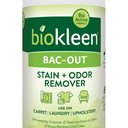
Turf absorbs nothing. The urine passes straight through to the infill and the base, which is where the smell lives and where a trigger spray never reaches.
What Actually Stops Artificial Grass Smelling of Dog Urine
Volume of liquid, delivered through a hose, on a schedule. Turf holds nothing in the blades. The urine drained through the perforated backing into the infill and the base, and only enough water travels the same route.
On carpet the difficulty is getting liquid deep and keeping it there. On turf, getting it down is easy and keeping it there is impossible, so you trade dwell for volume and repetition.
The hose matters more than the bottle. A trigger spray wets the blades, the blades are plastic, and plastic holds nothing worth treating. The deposit sits on the infill grains under the blades, and a garden hose pushing treated water through the backing is the delivery that reaches it.
Schedule beats intensity because turf keeps re-soiling itself. A dog uses the same run every day, and each visit lays new material over the infill the last treatment cleared. A short interval keeps the deposit thin enough that each flush removes it, and waiting for the smell stacks the job past what one afternoon fixes.
None of this is about product strength. The same concentrate at the same setting clears a thin recent deposit and bounces off a season of them, and that difference is what volume and repetition buy on a substrate that cannot hold liquid.
| Does a manufacturer name this surface | Yes. Simple Green's Outdoor Odor Eliminator page names artificial turf and gives a hose-end method |
|---|---|
| Published dwell time | Not established. |
| What we do not transfer | Bridgepoint's 4 to 24 hours is a carpet specification for a covered indoor area. |
| Applicator | Hose-end or pump sprayer. Water volume is what carries product down through the infill |
| Where the deposit sits | On the infill grains and the geotextile beneath them, not on the blades you can see |
| Rinse volume | Enough to visibly run and drain. |
| Best time to treat | Evening or an overcast day. |
| Moisture floor | Bridgepoint claims its bacterial product works down to 10 percent relative humidity. |
Where Dog Urine Goes on Artificial Turf
A residential turf installation is a stack, and the smell lives in the middle of it.
The stack explains the whole method. Everything above the infill rinses clean in seconds, and everything below it is out of reach, so the treatment window is narrow: liquid has to pass through the blades and keep going until it has wet the grains.
- The blades and thatch:
- Plastic fiber that holds nothing and rinses clean, so the surface can look fine while the area does not.
- The infill:
- Sand, coated sand or rubber granules, with an enormous surface area for a deposit to dry onto.
- The perforated backing:
- Drainage holes that let urine through in seconds.
- The geotextile weed barrier:
- The one genuinely absorbent component in the assembly.
- The compacted base:
- Crushed aggregate that drains, unless the turf was laid over a slab or a balcony.
The deposit on the infill is the same as indoors. It is urea, the bacteria that convert it to ammonia, and salt residue that rewets at roughly 55 to 75 percent relative humidity.
Humidity is the trigger that makes an old deposit speak. The salt left behind pulls water out of the air, the rewetted film reactivates the bacteria, and the run smells again on a morning that was fine the night before. The honest test of a treatment is a warm damp day rather than a dry one.
Drainage is the design feature that cuts both ways. The holes that let urine through in seconds also let treatment through, and they let rain carry deposit deeper when a loaded run meets a storm. An installation that drains fast is an installation you can flush, and the first question about any smelly turf is whether it still drains.
Why Turf Needs Volume Rather Than a Stronger Mix
The instinct outdoors is to mix it stronger because the area is big. Cleanfax gives the trade rule instead: recreate the crime, and add as much deodorizer as there is contamination present. On turf the contamination is spread thin across the surface area of the infill grains, so water is the delivery vehicle rather than a diluent.
Volume also keeps the product honest. Mixed at the label setting and pushed through with the hose, the working liquid arrives at the grains in a form the label accounted for. A stronger mix poured thinly wets the top of the mat and quits, and the extra strength never meets the deposit.
No manufacturer we read states a coverage rate for turf. Simple Green's page gives a hose-end procedure with no dilution ratio, coverage area or contact time. The PE-51 turf cleaner puts its specifications in a document we could not open. Measure the result instead: treat until the flush runs and drains, then check the base an inch down.
The inch-down check is the turf equivalent of the towel test indoors. It converts an invisible delivery question into a wet finger and costs nothing. Run it in three places per section, because turf drains unevenly and one wet spot can hide two dry ones.
The flush also removes what the chemistry loosens. Rinsing carries broken down deposit through the backing and out of the assembly rather than leaving it to dry back onto the grains. On carpet a wet vacuum does that job, and on turf the drain does it for free, which is the one part of the outdoor job that is easier.
What You Need to Treat a Turf Area a Dog Uses
This job is bought as a concentrate, because the volume is the point.
The concentrate format is the method rather than a cost decision. Treating turf means moving hose volumes of liquid, and only a concentrate rides along with the hose at a sensible price. A ready to use spray would need a bottle per few square feet and would still land mostly on the blades.
- A hose-end sprayer:
- It meters concentrate into the water stream at hose volume.
- A stiff push broom:
- For working infill loose so liquid reaches grains rather than sliding over a compacted mat.
- A garden hose with a shutoff:
- For the plain-water rinse before and after.
- A leaf blower:
- For moving standing water off slow-draining installations.
Ohio State's Indoor Pet Initiative names Thornell's K.O.E. concentrate among the enzyme cleaners it recommends, the only university source we found naming a brand. Simple Green says its outdoor product uses powerful natural enzymes, with no enzyme, concentration or baseline named, so read that as a claim rather than a specification.
The disclosure gap repeats outdoors and the reading rule carries over. A university source naming a brand is worth more than a marketing page naming none of its actives, and neither replaces the inch-down check. Outdoors the substrate holds nothing, so verification has to be physical rather than chemical.
Buy the sprayer once. Anything that leaves the metering to the wrist recreates the trigger spray problem at garden scale.
How to Treat Artificial Grass So the Product Reaches the Infill
Work one section at a time, roughly 100 square feet, in the evening or on an overcast day.
The sequence runs rinse, treat, leave, and every earlier step serves the pour. Clearing and brushing open the infill, the plain water pre-rinse starts the deposit moving, and the hose-end pass delivers working liquid into an assembly already flowing. Skipping the pre-rinse pushes product across a dry mat and out the drain.
Sectioning keeps the water honest. A hundred square feet is what one brushing, one rinse and one treatment pass cover before the sun or the evening air starts taking moisture back. Work a section to completion rather than wetting the whole lawn and returning.
The two finger check is the only quality control this job has. Run it while the surface still shines, because the wet front drops fast once the hose stops, and a dry inch means the pass counted for the blades and nothing else.
Solids come off first because everything after that step is liquid. Waste left on the blades dissolves into the treatment water and lands on the infill as new deposit, which is how a treatment can feed the very layer it was meant to clean.
Overcast timing is about the surface, not your comfort. A cooler surface holds the wet front longer, which stretches the working time of a product that has no published dwell. Evening buys the same hours without the sun racing the hose.
Pick a rhythm and keep it across sections: brush, rinse, treat, check, move on. The rhythm prevents the two classic turf mistakes, treating a dry mat and rinsing off what was just applied. Any order that passes the two finger check is a working order.
-
Pick up solid waste and rake out debris. Simple Green's own outdoor procedure starts the same way.
1 clearing pass
-
Work the infill loose with a stiff push broom, against the blade direction. A compacted mat sheds liquid sideways.
1 brushing pass
-
Rinse with plain water for 2 to 3 minutes per 100 square feet, which pre-wets the infill so the treatment travels.
2 to 3 minutes per 100 square feet
-
Apply through a hose-end sprayer at the labeled setting, moving slowly enough that the surface stays visibly wet behind you.
1 pass to visible runoff
-
Push two fingers into the infill in three places. Dry an inch down means you did not use enough water.
3 check points per section
-
Leave it. There is no cover step outdoors and no dwell figure to hold to, because no manufacturer publishes one for turf.
0 cover steps
-
Do not rinse it off afterward.
0 final rinses
-
Blow or squeegee standing water off slow-draining sections, then judge it 48 hours later on a warm morning at blade level.
48 hours
When to Treat Turf So It Does Not Dry Out First
Outdoors you cannot cover 200 square feet of turf, so timing replaces the plastic sheet Bridgepoint prints on its carpet instructions.
Treat in the evening or on an overcast day. Plastic turf in direct sun runs far hotter than the air, and a midday July application can dry before a bacterial product finishes germinating. PLOS ONE puts spore outgrowth at roughly 1 to 2 hours.
The plastic surface is why timing outdoors is harsher than indoors. Carpet in a warm room loses moisture over hours, and turf in direct sun loses it in minutes, because the fiber heats far above the air and the water leaves through the same holes it came in by.
Taking a space from 68F to 50F slows growth roughly twentyfold in a published Bacillus cereus model run in liquid whole eggs. Treating at 40F is where the money goes quietly nowhere.
The two limits frame the season. Heat kills the treatment by drying it and cold stalls it by slowing the biology, and each shoulder of the year carries one of them. Warm months with evening treatments are the working window, and a schedule held through them costs less than a rescue attempted outside them.
Treat on a schedule, not on a symptom: weekly through warm months for a dog run, monthly for a lawn in occasional use.
The schedule also sizes the purchase. A dog run treats at a known rate through a known season, and the bottle that fits is arithmetic rather than guesswork. Symptom buying is what funds the year-round smell the replacement section warns about.
How to Tell Whether the Turf Treatment Worked
Two checks, one during and one after.
Neither check needs equipment, which is the point. The finger test reports delivery tonight, the morning sniff reports chemistry days later, and together they cover the two ways a turf treatment fails: the liquid never arrived, or the deposit was bigger than the pass.
During: push two fingers through the blades into the infill in three places. Wet infill an inch down means the liquid went where the urine went.
After: wait 48 hours, then check on a warm damp morning at blade level. A cool dry evening will pass a run that is still contaminated. A UV light is close to useless here, because fiber, infill and the treatment all fluoresce.
Warm and damp are the test conditions because they are the complaint conditions. The mornings that brought you to this page are the mornings that judge the treatment, and a verdict taken on a cool dry evening flatters the run and delays the next move. Wait for weather that matches the problem.
The during-check also tells you where to spend the next pass. Dry at one of the three points and not the others marks a drainage shadow, a low spot or a lane the broom missed. Treat the finding as a map rather than a pass or fail.
Judging at blade level is method rather than flourish. Ammonia sits low in still air, and a verdict taken standing up misses what a nose at the grass finds in a second. Bring the test to the height where you first noticed the problem.
Why the Fake Grass Still Smells After You Treated It
Five branches. Outdoors the last two arrive faster than indoors, because the assembly under the turf is not something you can treat through.
Read the branches against the assembly rather than the bottle. Half of them describe delivery failures on turf you can still fix with a hose and a broom, and the rest describe failures underneath, where the flush has nowhere to go or the assembly has stopped draining.
The weather branch is the one that misleads. A run that smells only on humid mornings is not cured on the dry days between, and treating it as cured is how a flushing job becomes an infill replacement.
The escalation on turf is shorter than indoors. The last stop is not a subfloor, it is the infill, and infill can come out and be replaced without lifting the turf. Reach for that only after brushing, pre-rinsing and a held schedule have all failed honestly.
The first branch is the most common and the cheapest to close. Compacted infill sheds liquid sideways, so the treatment runs off the mat and down the slope instead of down through the grains. Brushing against the lay and pre-rinsing until water disappears reopens the path, and neither step costs product.
The second branch is a calendar failure rather than a chemistry failure. A product applied at midday in summer dries before the organisms inside it finish waking up, and the aftermath looks exactly like a product that does not work. The same bottle in the evening is a different treatment.
Two branches share one ceiling: the base. When water will not move through it, nothing poured on top changes that, and the honest next call is a contractor rather than a concentrate.
-
You treated the whole area and the smell was back within a week.
Why: The product stayed on the blades. Compacted turf sheds liquid sideways, so a light application never reaches the grains.
What to do: Brush the infill loose against the lay, pre-rinse for 2 to 3 minutes per 100 square feet, then apply at hose-end volume until the flush runs.
-
You treated it at midday in summer and nothing changed.
Why: It dried before the chemistry started. Bacterial products need roughly 1 to 2 hours of outgrowth before enzyme secretion begins.
What to do: Re-treat in the evening or on an overcast day so the surface stays damp through the outgrowth window.
-
It smells fine most of the time and foul on warm humid mornings.
Why: A deposit is still present and the weather is rewetting it.
What to do: Move from treating on symptom to treating on schedule: weekly through warm months, with a plain-water rinse every day or two.
-
Water pools on the turf and takes hours to drain.
Why: The base is compacted, blinded with fines, or the turf was laid over a hard surface.
What to do: Blow or squeegee standing water off after treatment. If pooling happens every time, the base is the problem and no schedule fixes it.
What Not to Do to Artificial Grass
- Do not use bleach:
- Bleach on urine is a chloramine hazard rather than a cleaning strategy, and it can lighten turf fiber permanently.
- Do not pressure wash it:
- High pressure blasts infill out of the pile and can separate the tufts from the backing.
- Do not rinse the product off afterward:
- A final rinse washes it back off the infill you just delivered it to.
- Do not use ammonia-based cleaners:
- Ohio State's Indoor Pet Initiative is direct: the smell may attract the animal back.
Order matters on the list as much as membership. The first two entries ruin the chemistry, the middle two ruin the treatment or the turf, and the last calls the dog back. None of it is recoverable by pouring more product afterward, which is why the list runs ahead of the method rather than after it.
The pressure washer deserves its own line because it looks like the volume tool the method keeps asking for. It moves water, and it moves it with force the assembly was never built to take. Hose volume at low pressure reaches the infill, and pressure washing removes the infill and stresses the tufts.
Bleach carries the outdoor version of an indoor warning. The gas hazard is the same, and the fiber damage is permanent, because the color in plastic turf sits in the polymer rather than in a finish anyone can restore.
Sequence decides most of this list rather than chemistry. Rinsed and dried, a spot that saw the wrong product goes back to neutral, and the treatment that follows works as intended. The mistakes that cannot be rinsed away are the structural ones: lightened fiber, lost infill, and separated tufts. Run the list before the treatment and none of those repairs exist.
Whether to Keep Treating the Turf or Replace the Infill
The replace decision on turf is about the assembly, not the surface. The blades clean themselves and the infill is replaceable, so the question is which layer holds the deposit and whether liquid still moves through the stack.
Run the layer test before spending anything. Water that pools and drains slowly points at the base, where treatment flushes against a closed door. Water that runs through freely and still smells after a held schedule points at the infill, and new grains cost less than a fourth season of concentrate.
Infill replacement is the turf equivalent of replacing the pad under carpet. The turf stays, the grains come out, and the deposit leaves with them. It is physical work rather than a trade call on many installs, and it is the honest end of the cleaning road.
Keep the tiers priced before choosing. A held schedule is the cheap tier, infill replacement is the middle, and lifting and relaying turf over a failed base is the top. The spread between them is wide, and the drainage test tells you which one you are actually shopping for.
$39.95 to $89.97 Typical spend on this job
Low end is one concentrate or gallon jug at our catalog's August 19, 2026 prices. High end adds a hose-end sprayer at $15 to $30. We publish no figure for infill replacement or for lifting and relaying turf, because we found no published national price we could fetch.
What We Could Not Verify About Cleaning Artificial Turf
Three cases, and in each the answer is physical rather than chemical. The turf was laid over a slab or balcony with no drainage, so the flush has nowhere to go. The infill has taken all it can hold. Or the geotextile barrier underneath has taken the deposit.
Each case ends the same way: the deposit is somewhere liquid cannot be pushed, and the fix is mechanical. A slab underneath means lifting the turf. A loaded infill means new grains. A saturated barrier means both, and all three look identical from the blades up.
Telling the three apart is a drainage question. Watch a plain water rinse for a few minutes. Water that runs through freely points at the infill, water that stands points at the base or the slab, and water that drains but still smells points underneath.
Knowing where the numbers stop is the point of the list. Delivery to infill is checked by hand because no coverage figure exists in the documents we read, and the assembly underneath sets the ceiling of any treatment no matter what the bottle says.
A slab install is the one to catch early, because every treatment on it feeds the trap. The flush lifts the deposit off what it can reach and leaves the liquid standing under the backing, where it dries slowly and leaves the deposit behind. Lifting the turf early costs less than lifting it after a season of that.
None of the three cases is a chemistry verdict. The product can be exactly what it claims and the method exactly what the label says, and the assembly still wins. That distinction is worth making before the third bottle gets blamed for the first installation shortcut.
| Claim | Source | Tier |
|---|---|---|
| Simple Green's Outdoor Odor Eliminator names artificial turf, gives a hose-end procedure starting with removing solid waste, and publishes no dilution ratio, coverage area or contact time | simplegreen.com | Direct or original source |
| PE-51 Enzyme Synthetic Turf Cleaner states it uses microorganisms and places its application specifications in a document we could not open | artificialgrasssuperstore.com | WEAK |
| Bio-Charge specifies a 4 to 24 hour dwell and covering the area so the solution cannot dry. It is a carpet specification for a covered indoor area | spec-sheets.interlinksupply.com | Direct or original source |
| Bridgepoint claims Bio Modifier XtreMe works in moisture as low as 10 percent relative humidity. Manufacturer marketing copy, not a measurement | spec-sheets.interlinksupply.com | Direct or original source |
| Bacillus spore germination takes minutes and outgrowth to a dividing cell roughly 1 to 2 hours | journals.plos.org | Direct or original source |
| The trade volume rule is to recreate the crime: add as much deodorizer as there is contamination present | cleanfax.com | Secondary source |
| The cost of odor control should not exceed the cost of replacement of the textile | cleanfax.com | Secondary source |
| Never use ammonia-based products, because the smell may attract the animal back. Ohio State also names K.O.E. among the enzyme cleaners it recommends | indoorpet.osu.edu | Secondary source |
| Catalog sizes, prices, ratings and per-product enzyme evidence levels, read August 19, 2026 | /about/ | Direct or original source |
| Dried urine leaves an alkaline salt residue that absorbs moisture from the air, which rewets the deposit and restarts the bacteria. The 55 to 75 percent band is our own reading. The author of the cited piece sells an enzyme product line | cleanfax.com | Secondary source |
- What we believe
- On artificial turf, water volume and treatment frequency decide the outcome, because the deposit sits on infill you can only reach by flushing.
- What would change our mind
- A manufacturer publishing a measured coverage rate and contact time for turf infill, showing that a low-volume application clears an aged deposit.
- What we could not verify
- Gallons per 100 square feet to reach infill, which no manufacturer, trade supplier or standards body we read publishes.
Frequently Asked
How do I stop my fake grass from smelling of dog urine?
Rinse the used patch with plain water every day or two, and treat with an enzyme or bacterial cleaner weekly through warm months. Brush the infill loose first and apply at hose-end volume until the flush drains. Rinsing first matters because dried salts sit on top of the infill and look like the problem. Water moves the loose material down and the treatment follows it. The weekly cadence exists because every walk deposits again.
What is the best cleaner for artificial grass?
A concentrate you can run through a hose-end sprayer, because volume rather than strength decides this surface. Simple Green's Outdoor Odor Eliminator is one of the few products whose own page names artificial turf, though it publishes no dilution ratio, coverage rate or contact time. The concentrate route also matches the geometry. A patch a dog uses is measured in feet, and a trigger bottle cannot cover it at working strength. Hose-end volume is the delivery the surface asks for. Buy the dilution you can verify, not the name you recognize.
What is the best odor eliminator for artificial grass?
For a smell that keeps returning, an enzyme or bacterial product that reaches the infill. A masking spray or a scented granule treats the air above the turf and leaves the deposit on the grains. The urine has already passed through to the infill by the time anything smells. Anything that does not follow it down is decoration.
More on the same problem in Surfaces and Materials.