Enzyme Cleaner on Upholstery Without Leaving a Ring
Check the letter on the tag under the cushion before you open the bottle. An enzyme cleaner is water with chemistry in it, so on a fabric coded W it belongs and on a fabric coded S it does not. If the tag says W, the method is not the carpet method.
The chemistry is the same as carpet. The physics is not, because a cushion holds the water and carpet gives it back.
| Dwell time | Ten minutes fresh, overnight on older spots, per Rocco and Roxie's own instructions. |
|---|---|
| Volume of product | Enough to wet the foam under the mark, not only the face fabric. |
| Dilution | Ready to use. |
| Water temperature ceiling | Rocco and Roxie says not to run its product through a steam cleaner, because high heat deactivates the biological ingredients |
| Working pH range | One published subtilisin protease is active from pH 6.0 to 12.0 and inactivated below pH 4 |
| Surface compatibility | Code W: proceed. Code S: do not. |
| Time to result | Judge at 48 hours, once the foam is dry all the way through. |
| Cost per treatment | $12.72 to $23.97 for a 32 ounce pet spray, which treats several cushion-sized areas |
What the Letter on Your Couch Tag Actually Means
The tag is stapled under the seat deck or sewn into a cushion cover, and it carries one or two letters. That letter decides whether a water-based product is allowed near the fabric.
The letter exists because cleaning methods sort by solvent. Water-based chemistry and solvent-based chemistry damage different fabrics in different ways, and the code is the manufacturer telling you which failure it designed against. Reading it is the only free decision in this whole job.
- W:
- Clean with water-based methods. Joybird prints that definition on its own fabric specifications, and an enzyme cleaner is water-based.
- S:
- Dry solvent cleaning only. Water is the hazard, and an enzyme product is mostly water.
- WS and X:
- We could not fetch a manufacturer definition for either. Read WS as permitting water and X as permitting neither, and confirm with the maker before you wet anything.
The W and S split is also the product split. Everything in the enzyme aisle is water with biology in it, and everything made for S fabrics lives in the solvent aisle. There is no third option that works on both, and any bottle claiming otherwise is claiming against the tag.
With no tag, treat the couch as S until you have tested. Press a swab wet with product into a hidden area for 60 seconds and check it for dye transfer.
The 60 second swab protects two things at once. Dye transfer ruins the visible face of the cushion, and a fabric that bleeds under a water-based product is telling you it belongs in the S column whatever the tag says. Hidden area first, always, because the test is cheap and the mistake is not.
Where Cat and Dog Urine Actually Goes in a Couch
The mark on the face fabric is not the problem. The problem is under it, in foam that holds many times the volume the fabric does.
Foam is the destination because foam is a sponge with no exit. Face fabric sheds liquid to the air fast, and cushion foam holds it in cells that give it back slowly. A small accident on the surface is a large reservoir a short distance under it by the time anyone starts cleaning.
- Urea:
- The compound carrying most of the nitrogen in urine. Bacteria carry urease, which splits it into ammonia.
- Felinine:
- A compound only cats put in their urine, which breaks down over 12 to 24 hours into the sulfur compound people mean by cat urine.
- Salt:
- The dried residue is largely salts, and salts pull water back out of humid air at roughly 55 to 75 percent relative humidity.
- Not uric acid:
- Dogs and cats convert uric acid to allantoin in the liver, and uric acid has no smell.
The chemistry list is the same as carpet because the deposit is the same. What changes is the container: carpet sits over a pad and a floor that can be soaked and extracted, and a cushion is a sealed foam envelope that keeps whatever it takes. Same enemy, different terrain.
Terrain decides the tactics. On carpet the answer to depth is more liquid, and on a couch more liquid is the ring and the damp cushion in the failure tree. Every tactic on this page delivers depth of treatment without the volume carpet would use.
What You Need to Treat Upholstery Without Soaking It
A wet vacuum matters more here than the brand of cleaner. On carpet you can let it dry. In foam you cannot. **A pourable enzyme or bacterial cleaner:** Rocco and Roxie's own instructions name couches and give a removable-cover method. **A wet vacuum or upholstery extraction tool:** The removal step, and the one that decides the outcome. **White cotton towels and a box fan:** White so you can see what comes out. The fan dries a cushion in a day rather than three. One label claim to read as a claim: Simple Solution calls its Extreme formula 3X stronger than its standard one and states no baseline.
The extraction tool earns its place twice. It ends each cycle by taking the working liquid and the dissolved deposit out of the foam, and it is the only thing standing between a treated cushion and a ring, because a drying cushion without extraction carries its soil to the perimeter. Rent it, borrow it, or buy the canister version, and skip it only if the couch is disposable.
The damp towel in the kit is a dwell instrument rather than a blotter. Laid over the treated area it holds the wet against the fabric without flooding the foam underneath, and it comes off before the extraction rather than after. It is the upholstery answer to the plastic sheet on carpet, scaled to what a cushion can survive.
The label claim line is a reading habit worth keeping everywhere. A multiplier with no baseline tells you a company positions one product against its own cheaper one, and it says nothing about the mess in front of you. The tag, the swab and the extraction say everything that matters here.
How to Treat Urine on a Couch Without Leaving a Ring
The ring is a drying artifact. A wet edge that dries slower than the middle carries dissolved soil out to the perimeter and leaves it there. Everything in this sequence is aimed at that.
The sequence trades dwell for control at every step. The stream puts liquid where it is aimed, the towel holds contact without a flood, the extraction takes the water back before the foam fills, and the fan closes the window. None of it is the carpet method wearing a smaller coat.
Feather the edge and you delete the ring's cause. A treated panel that ends at a hard border dries unevenly at that border, and everything the liquid carried stops there. Wetting slightly past the working edge with plain water, then extracting the whole panel at once, gives the soil nowhere to collect.
Two cycles maximum is the ceiling on this surface, and the count is strict. A cycle means extraction to a quiet tank and a full drying between treatments, and a mist that never reached foam does not count. Past two honest cycles the deposit is deeper than a couch method reaches, and the insert is the next conversation.
The tag check comes before the bottle every time, even the second time. Covers get swapped, cushions get moved between rooms, and a code read once in good light is not a property of the couch forever. Ten seconds under the seat deck is the cheapest insurance in the sequence.
The overnight towel option belongs to old deposits, and the choice is about what the foam can survive. A fresh spot needs minutes of contact because the deposit is loose; an old one needs the long version because the chemistry has to work through dried material. In both versions the towel comes off and the extraction follows, and the cushion never spends a wet night sealed inside its cover.
-
Find the tag under the seat deck and read the code.
1 tag check
-
Test a hidden area: press a swab wet with product into it for 60 seconds and check for dye transfer.
60 seconds
-
Remove any washable cover and launder it.
30 minute pre-soak
-
Apply to the marked area in a stream, not a mist, until the fabric is wet but nothing pools on the surface.
1 application
-
Lay a damp towel over it to hold contact time: 10 minutes on a fresh spot, overnight on an old one.
10 minutes minimum
-
Extract with a wet vacuum on suction and no heat, in overlapping passes, until the tank stops filling.
1 extraction
-
Put a box fan across the cushion and dry it within 24 to 48 hours, standing it on edge if you can.
24 to 48 hours
-
Judge it at 48 hours by compressing the cushion and smelling at cushion level, then repeat the cycle once.
2 cycles maximum
The Step People Skip on Upholstery: Taking the Water Back Out
On carpet the instruction is to keep it wet for hours and let it dry in place. Transplanting that to a couch is where this goes wrong.
The transplant mistake is understandable because the label invites it. The same bottle, the same mess, the same word soak on the back of the package, and a different assembly underneath. Upholstery is the surface where following the carpet instruction does damage the label never mentions.
Cleanfax reports the field conditions a bacterial product needs. It wants moist and warm for 24 to 48 hours within a narrow pH range, which Cleanfax calls difficult to sustain. Those are also the conditions that promote mold growth. A carpet over a subfloor dries. A foam cushion inside a fabric cover does not.
The overlap in that paragraph is the whole argument. The page refuses to pick a winner between the two biologies, because the cushion loses either way.
So on upholstery you cannot have both volume and unlimited dwell, and what you give up is dwell. Two shorter cycles with extraction between them beat one long soak that leaves wet foam inside a cover for two days.
Extraction is what makes short cycles add up. Each pass puts chemistry in contact with deposit and then removes both, and the repeat builds total contact time across dry intervals. It is slower than one heroic soak, and it is the only version that does not gamble the cushion.
How to Know the Couch Is Actually Clean
Wait 48 hours, then use your nose at cushion level rather than standing over it. Press the cushion hard with both hands first, because compression pushes air out of the foam.
Compression is the upholstery equivalent of pressing a towel into carpet. It moves the air out and the smell up, and it samples the foam rather than the fabric. Any test done without pressing the cushion reads the face fabric, which was never the problem.
Do the same test on a warm humid afternoon with the windows shut. The salt fraction takes up water from humid air, and that is the condition that brings the smell back.
Expect it to smell worse in the first hour. Adding liquid to a dried deposit remobilizes the odorants before anything degrades them, and that spike means the product reached the contamination.
Treat the spike as a progress report with a deadline. It means liquid met deposit, and the next hours decide whether the meeting was productive. Extraction on schedule and a fan on the cushion turn the spike into a fading curve, and letting it dry where it sits turns it back into the original problem.
A white towel pressed into the middle for 10 seconds tells you about volume. If it comes up dry an hour after application, you did not use enough to reach the foam.
The dry towel an hour later is the cheapest diagnostic on the page. Wet foam under dry fabric gives itself away to a pressed towel, and the fix is immediate: apply again to the same area, in a stream, before the extraction. Volume errors on upholstery are correctable in minutes when caught that way.
Why the Couch Still Smells After You Cleaned It
On upholstery the water you leave behind causes as many problems as the deposit does.
Half the tree is about water rather than urine, and that is the surface's signature. The ring, the damp cushion and the returning smell after a loosening all describe liquid that went somewhere and stayed. On a couch, the water you control is the half of the treatment you own outright.
Read the branches in cost order. The first two fixes are technique, the third is a repeat cycle, and the fourth is a drying rescue. None of them names a different product, because no branch on this tree was caused by one.
The musty branch is the one that changes category. A cushion that has moved from urine smell to mold smell is describing its own interior, and no enzyme product addresses mold. Fans, an open cover and time are the response, and replacement is the honest backstop.
The ring branch rewards immediate action more than any other. A ring that is hours old is dissolved soil sitting at a border, and rewetting the whole panel while it is still mobile lets extraction take it away. A ring that dried for a week is a stain decision rather than a cleaning one, and it belongs to the oxidizer discussion on other pages.
The middle branch is the honesty test of the whole method. Fabric that looks clean over foam that still smells means the application stopped at the surface, and the mist is almost always the reason. The stream costs nothing extra and reaches the layer that matters, and the failure tree exists because the mist keeps happening.
-
There is a visible ring around where you treated.
Why: The wet edge dried slower than the middle and carried dissolved soil out to the perimeter.
What to do: Rewet the whole panel including the ring, feather a 2 inch band past it with plain water, extract, and dry the entire cushion at once with a fan.
-
The face fabric looks clean and the smell is unchanged.
Why: The product treated the fabric and never reached the foam. A mist wets the face and stops there.
What to do: Re-treat by pressing product through the fabric until the foam is damp about 1 inch down, then extract.
-
It smelled better for two days and then came back.
Why: The deposit was loosened and left in place. Without extraction the dissolved material dries back into the foam.
What to do: Repeat the cycle and finish with a wet vacuum until recovery water runs clear, usually 3 to 5 passes.
-
The cushion is still damp three days later and now smells musty.
Why: Foam inside a cover does not dry on its own.
What to do: Unzip the cover, stand the insert on edge, run a fan across both faces for 12 hours, and stop soaking it in future cycles.
What Not to Put on a Couch With Urine in It
- A steam cleaner, first:
- Rocco and Roxie's FAQ says high heat deactivates the biological ingredients. Pre-treat, dwell overnight, then steam clean a day or two later.
- Hydrogen peroxide or an oxygen cleaner, before the enzyme:
- Peroxide is the real problem and vinegar is the myth. The patent literature says outright that hydrogen peroxide would kill the probiotics.
- Bleach:
- Hypochlorite meeting the ammonia in urine makes chloramine, and one detergent protease held zero residual activity at 5 parts per million of hypochlorite.
- Protease on wool or silk, without checking:
- Rocco and Roxie states its formula is safe for silk and wool and asks you to test for colorfastness. Protease cuts protein, and both fibers are protein.
- More product on a fabric that is already wet:
- Once the foam is saturated, additional liquid runs to the perimeter and dries there. That is the ring.
Sequence holds the list together. The steam entry is about order, pre-treat now and steam later; the peroxide entry is about order, rinse before the biology; and the last entry is about order, no more liquid into wet foam. The list is less a set of bans than a correct order stated as one.
The wool and silk entry is the only one that asks for a test rather than obedience. Protein fiber meets protein cutting chemistry, and the manufacturer's own guidance is a colorfastness check rather than a prohibition. Run the swab test from the tag section on any protein blend before the first application.
The bleach entry carries a number worth pausing on, because zero residual activity at a few parts per million is not partial. A disinfectant strength pour leaves nothing for a follow-up product to work with, and the gas hazard rides along with the chemistry failure. On a couch, close to the face and close to the room, it is the worst entry on the list to test.
When a Couch Stops Being a Cleaning Problem
Three signs, and any one of them ends the cleaning phase.
The signs share a location theme. Two failed cycles mean the deposit sits deeper in the insert than a stream and an extraction reach; the deck and the frame are underneath the whole assembly; and the behavioral sign is upstream of the couch entirely. Each one moves the fix out of the bottle's reach.
The smell survives two full cycles with real extraction and 48 hours of drying between them. At that point the cushion insert is the thing to replace rather than the bottle to rebuy.
The urine went through the seat deck into the frame or the webbing. Lift the cushion and look at the deck fabric underneath.
The deck check takes ten seconds. Cushions come off, and the fabric under them tells you whether the accident stopped at the cushion or went through. A dark deck means the frame and webbing are in play, and no cushion side treatment touches what is under the deck.
A cat has recently started urinating outside the box. See a vet before any cleaning strategy.
Cleanfax gives the stopping rule: the cost of odor control should not exceed the cost of replacement of the textile. On a couch that bites early, because a cushion insert costs less than four bottles and a professional visit.
The insert is the cheap move in this arithmetic. A cushion sized piece of foam costs a fraction of a professional visit and a small fraction of reupholstery, and it removes the reservoir entirely. When the lift and look says foam, the pricing exercise usually ends there.
What It Costs to Clean or Replace a Urine-Soaked Couch
- Do it yourself:
- The 3 pet products we hold in a 32 ounce size ran $12.72 to $23.97 in our catalog on August 19, 2026, and one bottle treats several cushion-sized areas.
- Hire the cleaning out, $125 to $250:
- Angi publishes that band for stain removal work. Upholstery is priced per piece and we have no sourced national figure for a sofa.
- Replace the insert:
- Foam inserts are sold by cushion dimension and we could not source a national price range. Measure and price it locally.
Two proper treatments cost less than one professional visit, and a visit costs less than reupholstery. Work up that ladder rather than sideways across four brands.
Treat, extract, dry, judge twice; then price the insert; then price the visit; then stop. Sideways spending, four brands against one cushion, is the only route that reliably costs more than the fix.
The missing national figures are named rather than smoothed over. Upholstery work prices per piece and per market, and a sofa with one soaked cushion is a different job from eight cushions and a deck. Local quotes answer in an afternoon what a national average would only misstate.
Count the fan and the towels as capital rather than consumables. Both survive to the next stain and the next surface, and the only recurring cost in the do-it-yourself tier is the liquid. That is the shape of a cheap job done properly rather than an expensive job done twice.
$11.89 to $250 Typical spend on this job
Low is one 32 ounce pet spray from our catalog, read August 19, 2026. High is the top of Angi's published band for stain removal work, $125 to $250.
What We Could Not Verify About Cleaning Upholstery
We could not source a manufacturer definition of the WS or X cleaning codes. Crate and Barrel, Kravet, Room and Board, Sunbrella, Maharam and La-Z-Boy all returned an error or a homepage redirect on August 19, 2026. We found no published measurement of how far urine travels into upholstery foam. A PubMed search that day for "upholstery cleaning enzyme urine foam cushion" returned zero records.
The WS and X gap is a fetching failure stated with its date, not a gap in the world. The definitions exist behind the manufacturers' own doors, and the conservative reading in the tag section stands in until they can be retrieved. A reader who confirms with the maker closes the gap personally in one phone call.
The penetration depth gap is the one that shapes the method. Without a measured figure for how deep urine goes in cushion foam, the page teaches a condition instead: damp an inch down, felt through the fabric, verified by extraction. The condition is checkable, which is what a missing number should always leave behind.
The zero-result search is reported as a zero-result search. It is evidence of absence in the places we looked on the day we looked, and it is not a claim about what a specialist knows. The page's confidence comes from the tag logic and the extraction argument, and both stand on their own feet.
One practical note rides with the gaps: the tag reading and the swab test make the unverified codes survivable. A conservative W-only policy costs a solvent trip for the odd S couch, and it never costs a ruined cushion. The gaps narrow what the page claims and widen what the reader can still do tonight, which is the right trade for an instruction page.
| Claim | Source | Tier |
|---|---|---|
| Rocco and Roxie's own instructions for couches, for removable covers washed with about a cup of product, for a 10 minute dwell fresh and overnight for older spots, for silk and wool, and the warning that high heat in a steam cleaner deactivates the biological ingredients | roccoandroxie.com | Direct or original source |
| Rocco and Roxie's laundry method: about 1 cup of product with a 30 minute pre-soak in warm water, then wash as usual | roccoandroxie.com | Direct or original source |
| Cleaning code definitions taken from a furniture maker's own published fabric specifications: W is clean with water based cleaning methods, S is dry solvent cleaning only. Joybird fabric care specifications, read August 19, 2026 | joybird.com | Direct or original source |
| A bacterial product needs the area kept moist and warm for 24 to 48 hours and held within a narrow pH range, conditions difficult to sustain in the field and identical to those promoting mold growth. Cleanfax | cleanfax.com | Secondary source |
| Putting water or moisture into a mattress can cause mildew or mold, and the upholstery tool extends a rental machine to upholstery, stairs and auto interiors. Rug Doctor carpet cleaning FAQ, read August 19, 2026 | rugdoctor.com | Direct or original source |
| Nature's Miracle's label colorfastness method: apply, wait 1 hour, then wipe and check | assets.unilogcorp.com | Direct or original source |
| A published subtilisin protease is active from pH 6.0 to 12.0 and is inactivated below pH 4. Falkenberg et al., FEBS Open Bio 12(10):1729-1746, 2022 | pmc.ncbi.nlm.nih.gov | Direct or original source |
| Hydrogen peroxide effects on protease are enzyme-specific and the published results conflict: 9.66 percent residual activity in one alkaline protease at 1 percent hydrogen peroxide, 97 percent in another, and a 450 percent increase in a third | pubmed.ncbi.nlm.nih.gov | Direct or original source |
| One detergent protease showed zero residual activity at 5 parts per million of sodium hypochlorite, tested at 25C for 60 minutes. US Patent 5,856,167 | patents.google.com | Direct or original source |
| Bacillus spore outgrowth to a dividing cell takes roughly 1 to 2 hours, with full outgrowth at 3 to 7 hours by live-cell imaging | journals.plos.org | Direct or original source |
| The trade cost rule, that the cost of odor control should not exceed the cost of replacement of the textile. Cleanfax | cleanfax.com | Secondary source |
| Stain removal as an add-on runs $125 to $250, and pet odor treatment runs $20 to $40 or more per room. Angi, recorded August 19, 2026 | angi.com | Secondary source |
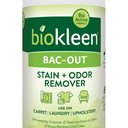
| Counted from the published product directory, prices and ratings read August 19, 2026: Rocco and Roxie Extreme Enzyme Stain & Odor Eliminator Spray 32 oz at $27.97 rated 4.5 across 127,300 ratings, Biokleen Bac-Out Stain & Odor Remover 32 oz at $34.98 rated 4.6 across 8,300, Simple Solution Extreme Urine Destroyer 32 oz at $13.95 rated 4.4 across 23 | enzymecleaningproducts.com | Direct or original source |
| We could not fetch a manufacturer definition of the WS or X cleaning codes. Crate and Barrel, Room and Board and La-Z-Boy returned HTTP 403 or a homepage redirect, and Kravet, Sunbrella and Maharam returned HTTP 404 or 307, on August 19, 2026 | joybird.com | UNVERIFIED |
| A PubMed search on August 19, 2026 for "upholstery cleaning enzyme urine foam cushion" returned zero records | pubmed.ncbi.nlm.nih.gov | Direct or original source |
| Dried urine leaves an alkaline salt residue and those salts absorb moisture from the air, which rewets the deposit and restarts the bacteria. The 55 to 75 percent band is our own practical reading; no critical relative humidity is published for urate. The author of the cited piece sells an enzyme product line | cleanfax.com | Secondary source |
- What we believe
- On upholstery the tag decides whether you proceed at all, and extraction decides whether the treatment worked.
- What would change our mind
- A published measurement showing a covered, unextracted foam cushion drying fully within 48 hours with no mold growth and no perimeter ring.
- What we could not verify
- Manufacturer definitions of the WS and X codes, and any figure for urine penetration depth in cushion foam.
Frequently Asked
Can you use enzyme cleaner on upholstery?
Yes on a fabric coded W, and no on a fabric coded S. The product is water-based, and S means solvent cleaning only. Rocco and Roxie publishes a couch method: wash removable covers with about a cup of product, and apply directly to fixed cushions. The code is the first instruction on the tag and it outranks every method. Cleaning the right way with the wrong liquid is how a cushion gets ruined rather than cleaned.
What is the best enzymatic cleaner for upholstery?
The tag decides more than the brand does. Among products a manufacturer confirms, look for a pour or squeeze applicator rather than a fine mist, a 32 ounce or larger size, and no added oxidizer. The applicator matters more here than on any flat surface. A fine mist sits on the surface yarn and dries, while a stream travels into the cushion. On a couch, delivery decides whether the deposit in the foam ever meets the product.
Can you use enzyme cleaner on fabric?
On washable fabric, yes, and the wash is the better route. Rocco and Roxie specifies about 1 cup of product with a 30 minute pre-soak in warm water, then a normal cycle. On fixed upholstery the code on the tag decides it. A wash cycle solves the delivery problem by total immersion, which no couch allows. That is the entire advantage: hours of contact with the soil, then a spin that takes the water back out. Fixed upholstery gets the same chemistry under harder physics.
Is vinegar considered an enzymatic cleaner?
No. Vinegar contains no enzymes. It neutralizes the ammonia note for about a day and leaves the deposit in the foam. Left wet in the fabric it also sits below pH 4, where one published subtilisin protease is inactivated. The foam under the fabric is where the deposit lands, and vinegar does not travel there usefully. What it does is add liquid to a cushion that has no way to drain it. The trade is a day of relief for a longer drying problem.
More on the same problem in Surfaces and Materials.